Iceland
July 2025
Þakgil and Lónsöræfi


August 2021
One month in Iceland: 30 nights of camping, 380 km of hiking, 1500km of hitchhiking, 12 film rolls, an erupting volcano, lava, glaciers, arctic foxes, seals, humpback whales, puffins, bird cliffs, moss, ice, fog, fumaroles, colourful rocks, waterfalls
Kerlingarfjöll circuit (+extra) 60km
Ásgarður-Hveradalir-Klakkur-Efri Kisubotnar-Ásgarður
Our first trek in Iceland was the three days Kerlingarfjöll circuit.
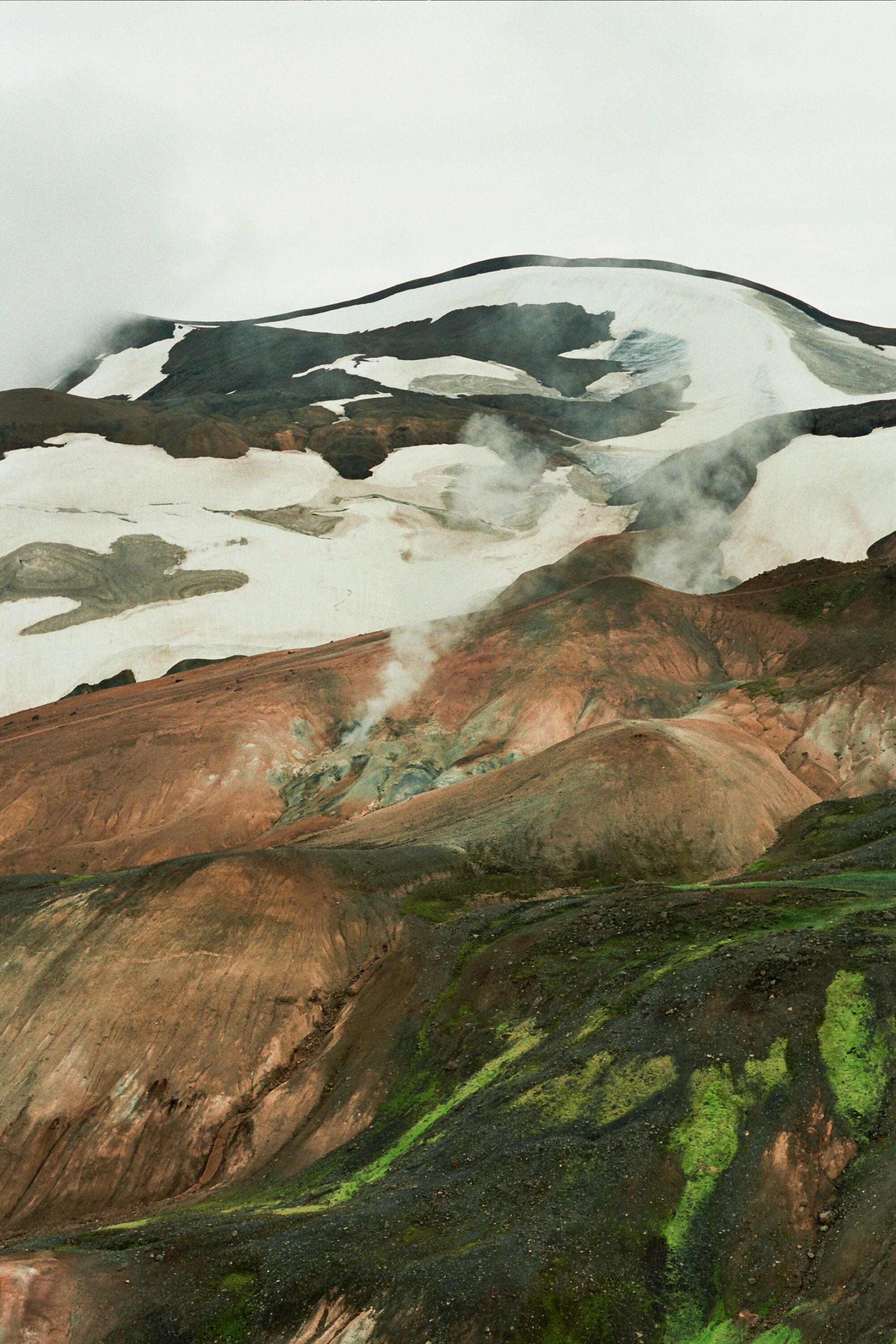
On the first day, after a few kilometres of walking through dense fog, we reached Hveradalir; a place well known for its geothermal activity. Here we dropped our heavy backpacks (Daniel 22kg, me 17kg) and explored for a few hours the colourful rhyolite and pyroclastic landscape. The strong smell of sulphur and rising vapours from mud pools dominated the area.
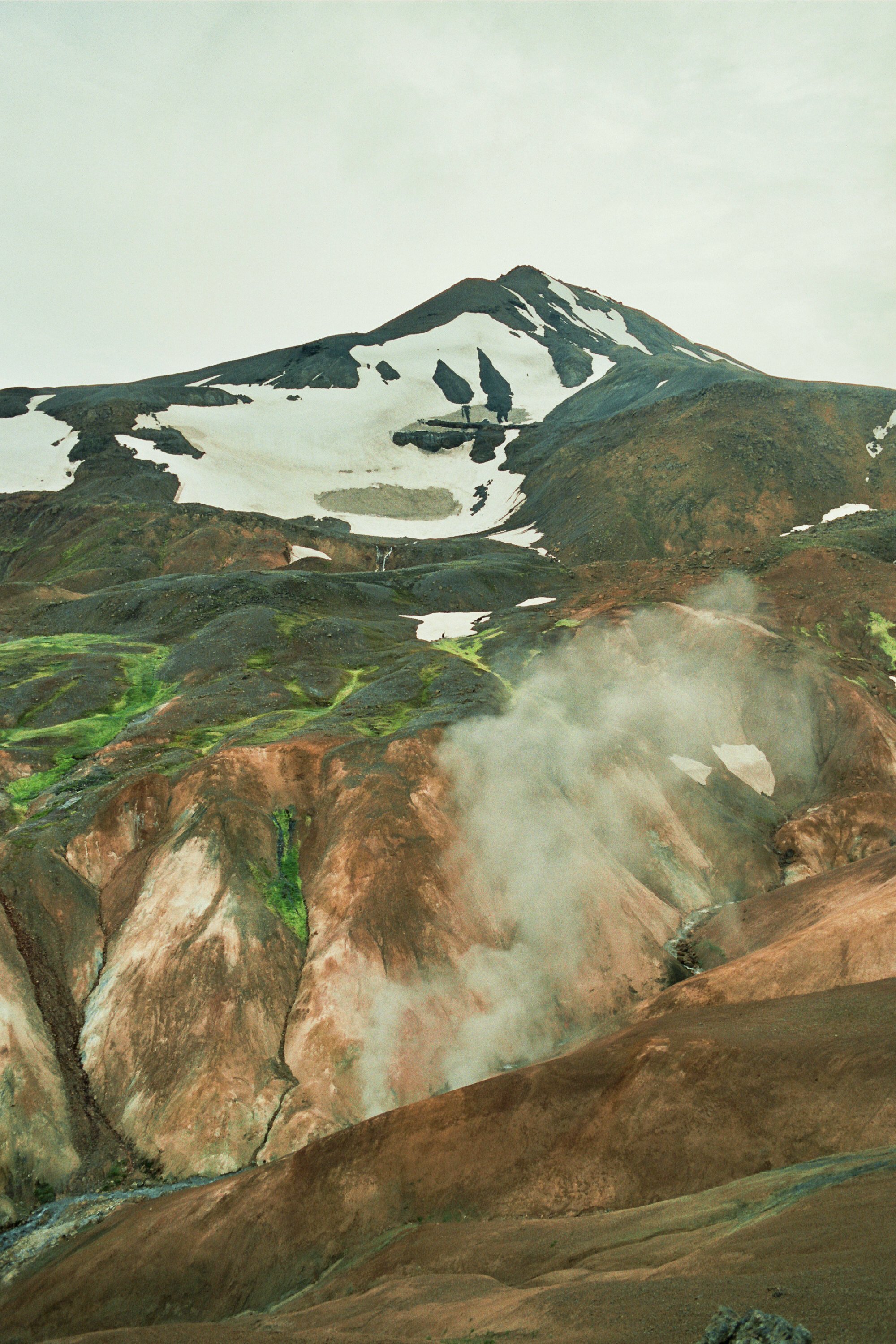
On day 2 we passed more smoky mountains, as well as snow and ice fields and neon green moss valleys.
Early in the day visibility was limited because of the fog, which made it difficult at times to orient ourselves. Snow crossings, fording ice-cold rivers and heavy rain were exciting moments, but after 12 hours of walking we arrived safely at Kisubotnar. Many saxifrages and Arctic river beauties coloured the wet sheltered valleys.
Because of the cold and rainy weather (and wet clothes and shoes from the day before) we spent half of day three in the tent, reading and drinking soup. Once the sky cleared up a little, we started walking the last bit of the trail. Black (of the rocks), white (the snow) and green (moss) were surely the dominant colours of this day.
At the end of our trail, we could relax in a thermal pool, a short walk from Ásgarður.


Graenihryggur hike (26 km)
While researching walks in Iceland, I came across this fascinating blue mountain. The hike was not described in the guidebook or marked on the map. Online, I could only find organised tours taking people there. We did, however, find a route on maps.cz and decided to try to find it ourselves.
From Selfoss, we hitchhiked to Landmannalaugar. The road through the Highlands is only accessible with a 4x4 and makes for quite an exciting ride. In Landmannalaugar (the starting point of many hikes), we asked the ranger for more information about the “Blue Mountain” hike. She explained that it’s an advanced hike and that the trail is unmarked. She then indicated how to get there and gave us permission to camp in the Hattver valley on the first night.
In the morning, after fording a large river, climbing a steep ascent, and crossing a snow bridge, we reached a vast plateau with great views over the surrounding rhyolite mountains — red, orange, yellow, blue, green, and brown. From there, we walked briefly along the ridge until we reached the beautiful blue mountain.
Laugavegur Trail (The Hot Spring Route) and Fimmvörðuháls hike (+extra) — 84 km
We completed the popular Laugavegur Trail in half the time — two days instead of four (we walked days 1 & 2 in one day and days 3 & 4 in another). Then we continued on the Fimmvörðuháls hike for another (long) day.
Day 1: Landmannalaugar – Hrafntinnusker – Álftavatn
We started the trail with a short detour to the summit of the colourful mountain Brennisteinsalda.
The route passes many hot springs, fumaroles, and solfataras. Probably the most exciting part of the day was the exploration of an ice cave. After crossing many rivers and snow bridges, we slowly left the rhyolite mountains behind and encountered dark palagonite mountains with increasingly green vegetation. At the end of the day, we camped next to a lake.
Day 2: Álftavatn – Emstur – Þórsmörk
This part of the trail involved the crossing of a lava desert and fording several large rivers. Thrift and campion added a little colour to the otherwise bleak desert. It was the longest (34 km) and most tiring day of the trek. Towards the end of the day, the change in landscape was noticeable; we encountered native trees for the first time in Iceland — that is, trees bigger than the 20 cm dwarf willow, which is quite common in the highlands. The kjarr, or birch forests, which followed not long after, were a welcome change of habitat, full of birds, mushrooms, wood cranesbill, and Iceland moss.
Day 3: Þórsmörk – Fimmvörðuháls – Skógar
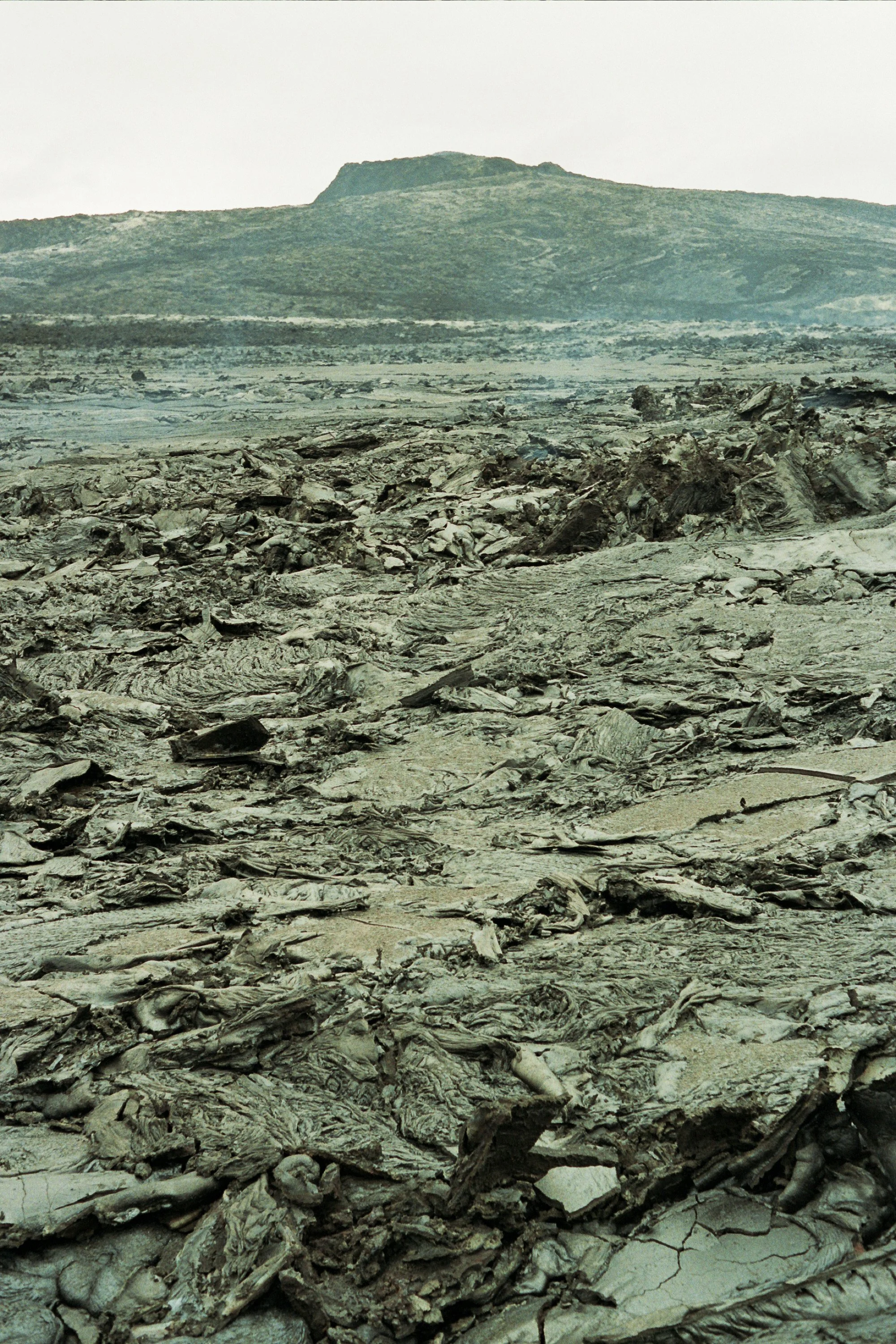
This hike runs through a gap between two glaciers, Mýrdalsjökull and Eyjafjallajökull. After an ascent of 1,000 m (including a small portion with chains), we arrived at a plateau where the volcanic eruption in 2010 occurred. The lava field, only 10 years old, was surely impressive. Here we had very strong wind. We descended on the western side of the route instead of the traditional east side. Though 2 km longer, it was quieter, and we could get very close to the glacier. Throughout the descent, we passed about twenty waterfalls, one more beautiful than the other.
From Skógar, we hitchhiked to Vík. The couple that picked us up also stopped on the way to see the puffin colony at the Dyrhólaey reserve. In Vík, we resupplied on food, washed our clothes, and finally took a shower.
Skaftafell National Park 44km
Public transport turned out to be quite a hassle in Iceland. Since the focus is mostly on car tourism, we figured we could try hitchhiking to get around. And it worked perfectly! This is how we also got from Vík to Skaftafell National Park.
Here we did several day hikes:
Kristínartindar summit, where we had amazing views over the Morsárjökull and Skaftafellsjökull glaciers
Morsárlón glacial lake
Svartifoss, the dark falls, so named because of the black hexagonal basalt columns that surround it
The turf-roofed houses of Sel
Our drive out of Skaftafell dropped us at Jökulsárlón glacial lake, where we briefly watched big icebergs floating and spotted playful seals.
Eastfjords, Víknaslóðir trail 66km
After 400 km of hitchhiking (from our last stop, Skaftafell), we finally arrived at the starting point of our trek in the Eastfjords, the village of Seyðisfjörður. The houses here are painted in cheerful colours like blue, green, red, yellow, orange, or purple.
All through our walk from Seyðisfjörður to Bakkagerði, we didn’t have much view of the high mountains because of the dense fog. Memories from this hike are: wind, wet shoes, sheep, moss, fog, more wind, bird cliffs, rain, cold.


Westfjords, Hornstrandir 70km
Hornstrandir peninsula is the most remote region of Iceland. Because there has been no agriculture in Hornstrandir for decades, nature has developed here freely. It is a protected nature reserve, rich in flora and fauna. We were told by the ranger that Bill Gates was not permitted to get to Hornstrandir by helicopter in order not to disturb the wildlife; he had to get here by ferry, like everyone else.
We arrived in Ísafjörður after 12 hours on the road and changing three different buses from Egilsstaðir. The morning after, we took the ferry to Hesteyri, the starting point of the trail. Fulmars flew along with our boat, and we even spotted several humpback whales.
In total, we spent five days in Hornstrandir, climbing many cliffs and walking from one beautiful bay to another. We especially enjoyed observing the many birds, lazy seals, and the playful Arctic foxes.
Fagradalsfjall volcano 30km