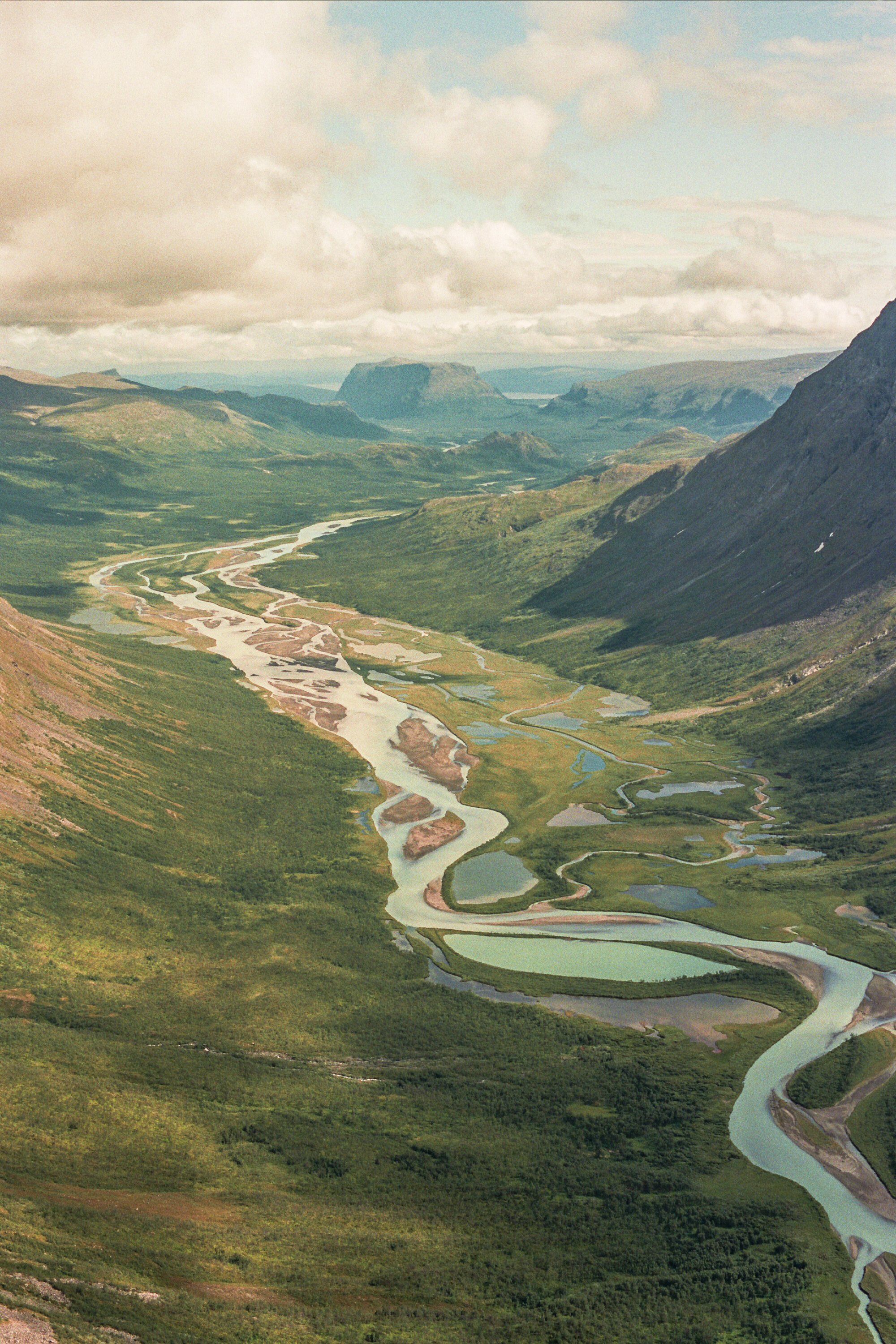
Sweden
Sarek National Park
After indulging in cinnamon buns and refillable coffees in Stockholm, we took the train north to Gällivare and then the bus to Ritsem, the starting point for our walk in Sarek National Park.
Day 1: Ritsem – old Sami hut (24 km)
From Ritsem we were dropped by helicopter in Akkasrugorna, a short flight across Akkajaure Lake. From there we followed Padjelantaleden for a while, then left the trail to walk along the Sjnjuvtjudisjåhkå River and camp next to an old Sami hut. The sky stayed stubbornly grey, hiding most mountain views, but it was a gentle introduction to Laponia’s flora: cotton grass, moor king, twinflower, Arctic starflower and cloudberries. Brambling, redpoll, golden plover, long-tailed jaeger and meadow pipit kept us company. Despite the lack of marked trails in Sarek, navigation felt straightforward, with only occasional boggy stretches to negotiate.
Day 2: old Sami hut – Ruohtesvágge hut (9 km)
The endless daylight completely confused our sleep, and we woke at 4:30 am. After porridge and packing up camp, we set off walking, but the fierce wind stopped us at Ruohtesvágge hut. We waited out the storm inside, warming ourselves with noodle soup and a bit of reading.
Day 3: Ruohtesvágge hut - Mikkastugan 21km
We woke at noon and started walking around 1 pm. The storm had finally passed and we were eager to move again. After wandering through the Ruohtesvágge Valley, we detoured towards the mouth of Oarjep Ruohtesjiegna Glacier, climbed to Boajsájávrásj Lake and followed Boajsájågåsj River down to the valley bottom, continuing until we reached Mikkastugan, an emergency hut. Along the way we crossed paths with a large herd of reindeer.
Day 4: Mikkastugan - Svarta Spetsen peak - Mikkastugan 16km
We shared breakfast with our camp neighbours, who brewed proper strong coffee, a welcome change from instant. Swedes truly love their coffee; even in the mountains they carry ground coffee, a pot and a filter. They also shared valuable knowledge and hiking tips in the area. With a long-awaited weather window, we climbed Svarta Spetsen Peak and enjoyed wide views of Spijkka, the Sarektjåhkka massif and Mihkájiegna Glacier. The rocks were covered in many fascinating lichens.
Day 5: Mikkastugan - Snávvájávrre lake 12,5km
The fifth consecutive day of grey skies. Wind, rain and permanently wet socks had started to wear us down, but our mood lifted instantly when we encountered hundreds of reindeer along the way.
Day 6: Snávvájávrre lake - Låddebákte Peak - Snávvájávrre lake - Skårkistugan (Skoarkki cabin) 14km
We climbed Låddebákte Peak (up and down from our campsite, without backpacks), from where we could look over the Ålkatj range and Ráhpaadno Delta. We then descended into Rapadalen. What first felt like an enchanted birch forest filled with colourful flowers quickly turned into a mosquito-ridden nightmare. We camped beside one of Axel Hamberg’s abandoned research cabins, Skoarkki.
Day 7: Skårkistugan - slopes of Vássjálåpptå 13km
Crossing Rapadalen meant bushwhacking through dense vegetation, sinking knee-deep into swamps and being relentlessly attacked by mosquitoes. Just as morale dipped further, the rain began. Our highlight of the day was spotting a distant moose; so far away that Daniel briefly mistook it for a bear, but nevertheless still exciting.
Day 8: Vássjálåpptå - Skierffe 15,5km
Thick fog reduced visibility to almost nothing, forcing us to navigate solely with map and compass all day. We climbed Skierffe, but the view was swallowed by milky white fog. By now our feet were blistered from over a week of walking in permanently wet shoes and socks.
Day 9: Skierffe - Sáltoluokta 35km
Motivated by the promise of a proper meal, we pushed through two days’ worth of distance in one along Kungsleden. Reaching Sáltoluokta felt deeply rewarding: a cosy, welcoming cabin and the comfort we craved after our Sarek adventure.