
British Columbia
From Jasper (see blog post “Canadian Rockies”), we took the train to Vancouver—almost 24 hours crossing the mountains. Trains in Canada are notoriously slow, often delayed or even cancelled. However, our journey turned out to be a very enjoyable experience. It felt less like simple transportation and more like visiting a moving museum—quite different from the trains in Europe, which simply take you efficiently from A to B.
Whistler
While towns in The Rockies like Banff and Jasper have an old-school, 1970s-style mountain vibe, Whistler feels more modern and “cool” by comparison, designed to meet the needs of today’s outdoor enthusiasts with its well-developed infrastructure for hiking, cycling and winter sports.
Rainbow mountain 32km
We were excited by the striking change in vegetation compared to the Rockies. The forests of the coastal mountains in southwestern British Columbia are lush, dense, and vibrant. Along the trail, we came across countless mushrooms and berries, bright lupine flowers, and towering Western red cedars and Western hemlocks.
We camped beside Hanging Lake, a beautiful spot that also proved to be a haven for midges, mosquitoes, and flies. The following morning, as we made our way back down, we had a close encounter with a black bear—an intense and unforgettable moment.
Garibaldi Provincial Park 104,5km
Day 1: Parking - Taylor Meadows campground 7,5km
Two days after we camped at Taylor Meadows, a black bear climbed a tree to reach the food hangers. He managed to steal several backpacks and ran off with them. The rangers later found him guarding the stolen packs and, sadly, had to shoot him.
Day 2: Black Tusk & Garibaldi Panorama Ridge 29km
From Taylor Meadows Campground, we climbed Black Tusk, then continued up to Garibaldi Panorama Ridge. After taking in the views, we returned to Taylor Meadows, packed up our backpacks, and hiked on to Helm Creek Campground. It was an exhausting but incredibly beautiful day. We set off at 6 a.m. and didn’t reach camp until 6 p.m.
Day 3: Helm Glacier & Cinder Cone Peak 16km
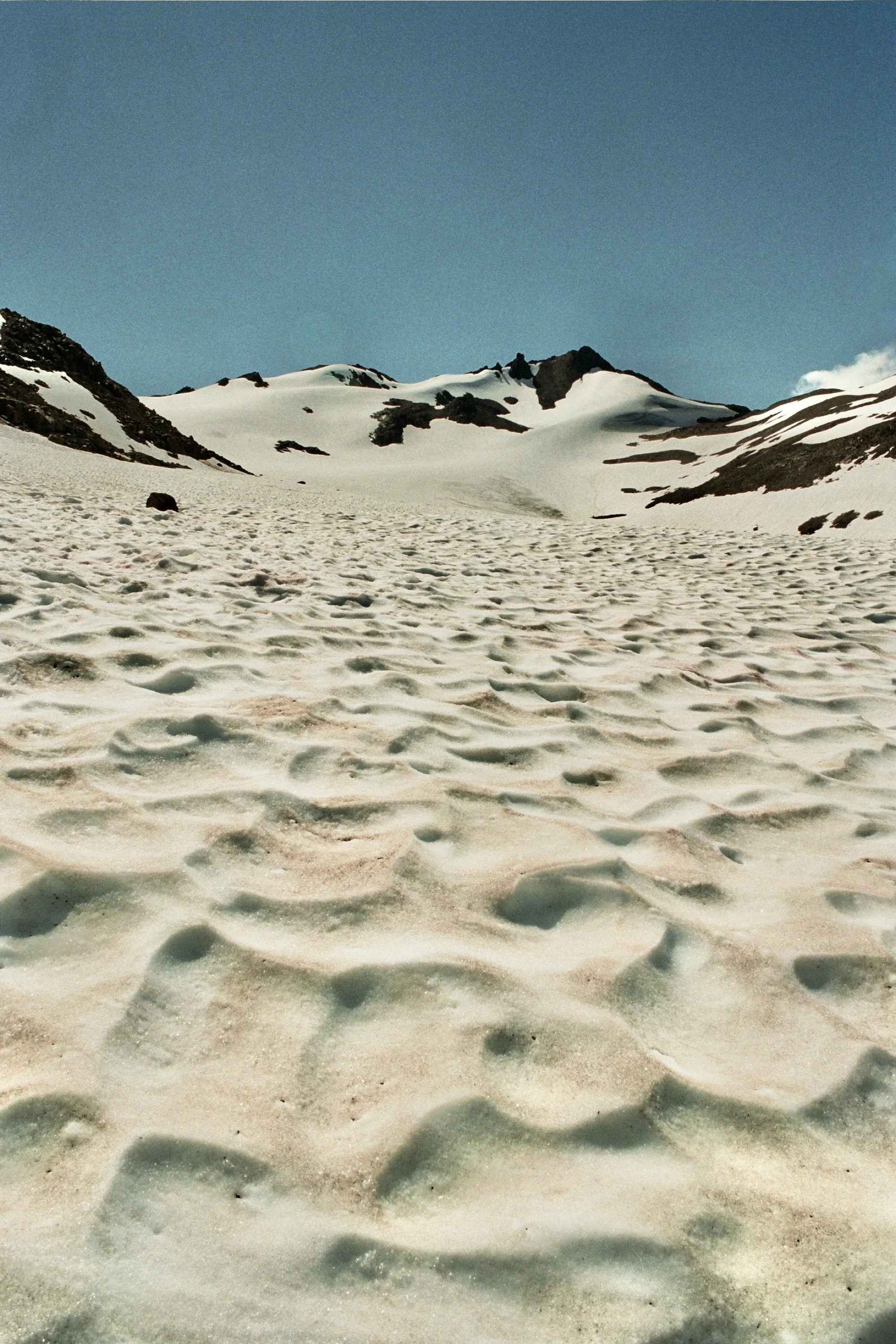
We hiked to and explored the area around Helm Glacier, which was a lot of fun, especially since there is no official trail. We followed the edge of the glacier until it began to feel unsafe without proper mountaineering equipment. Afterwards, we went for a swim in the lake and climbed Cinder Cone Peak, where we were rewarded with a stunning view of Helm Glacier and the surrounding lakes.


Day 4: walk out from Helm Creek camping & Russet Lake via Singing Pass Trail 24km
The Singing Pass Trail was remarkable for the sheer number and variety of mushrooms we encountered along the way—despite the unusually dry summer.
Day 5: (Almost) Wirlwind Peak and Overlord glacier 12km
In the morning, we set out toward Whirlwind Peak. However, just a few hundred meters below the summit, we decided to turn back, as we didn’t feel comfortable crossing the thick snowfield without helmets, ice axes, and crampons. Although the peak is usually mostly snow-free in summer, this year’s heavy snowfall had left significant coverage.
From the ridge, we enjoyed fantastic views of Cheakamus Lake and the surrounding glacier. It was frustrating to turn around so close to the summit, but our spirits quickly lifted when Orrin, one of our camp neighbors, invited us to share a bottle of wine. After a short afternoon nap, we headed out again to a beautiful viewpoint overlooking Overlord Glacier.
There are no official trails to either Whirlwind Peak or Overlord Glacier, so we had to navigate and find our own route. The evening was warm and pleasant, with surprisingly few mosquitoes, allowing us to relax with our camp neighbors and watch the stars.
Day 6: walk out from Russet Lake via Musical Bumps and High Note Trail to Whistler 16km
Tricouni Peak