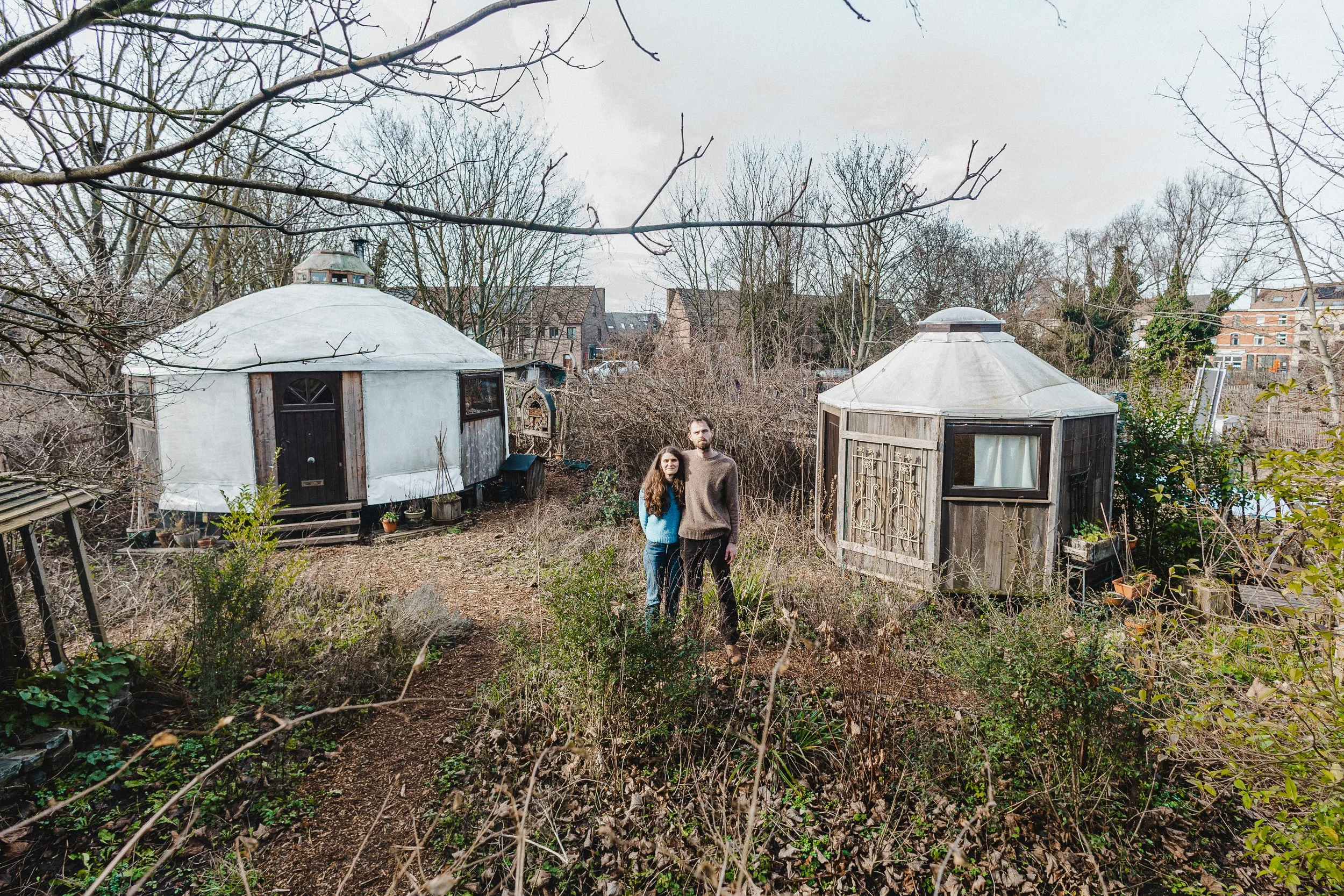
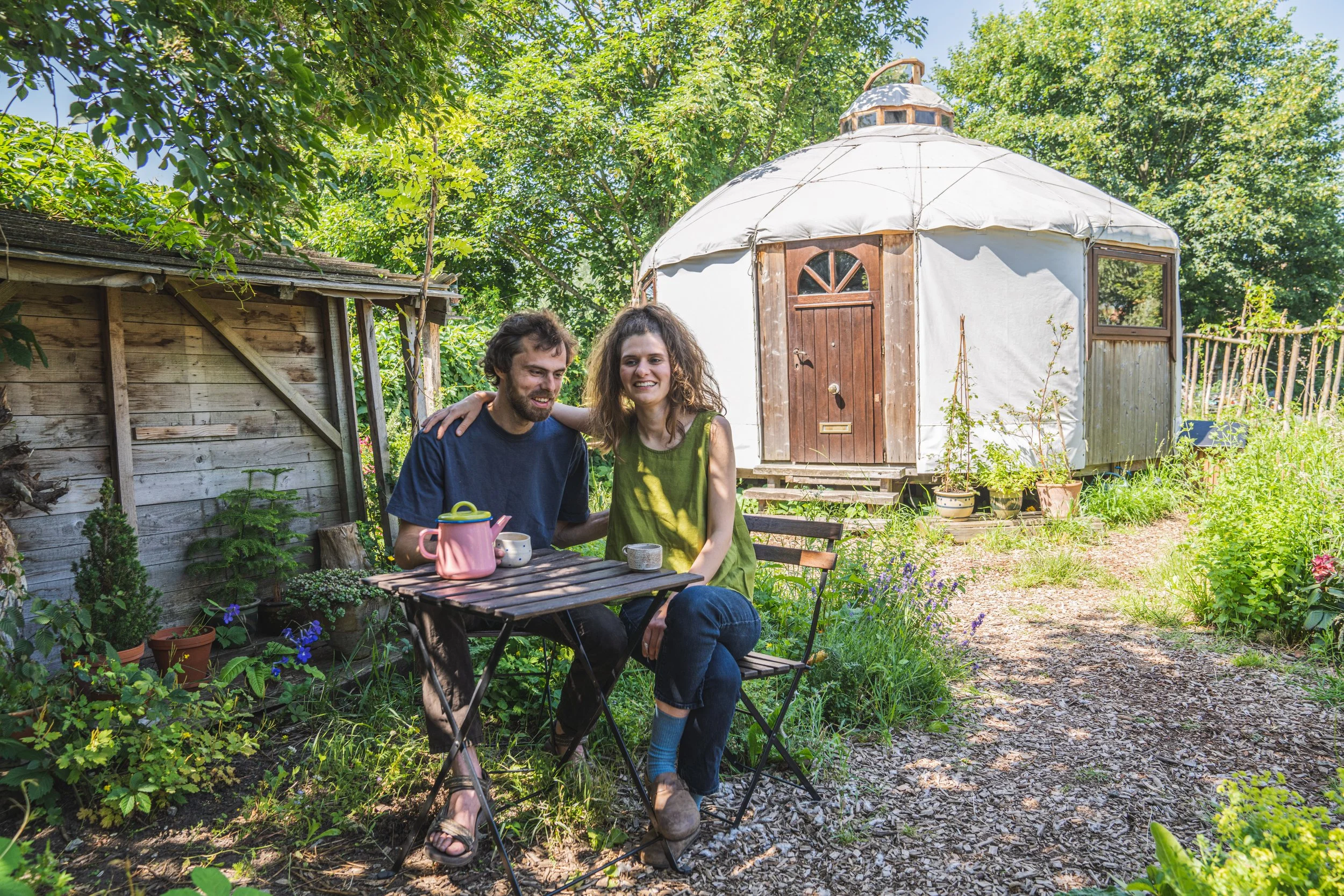
© Bianca Apostol
© Eva Donckers
© Myrtille Vanhouwaert
© Grégoire De Poorter
© Wannes Nimmegeers
© Irene Van Impe
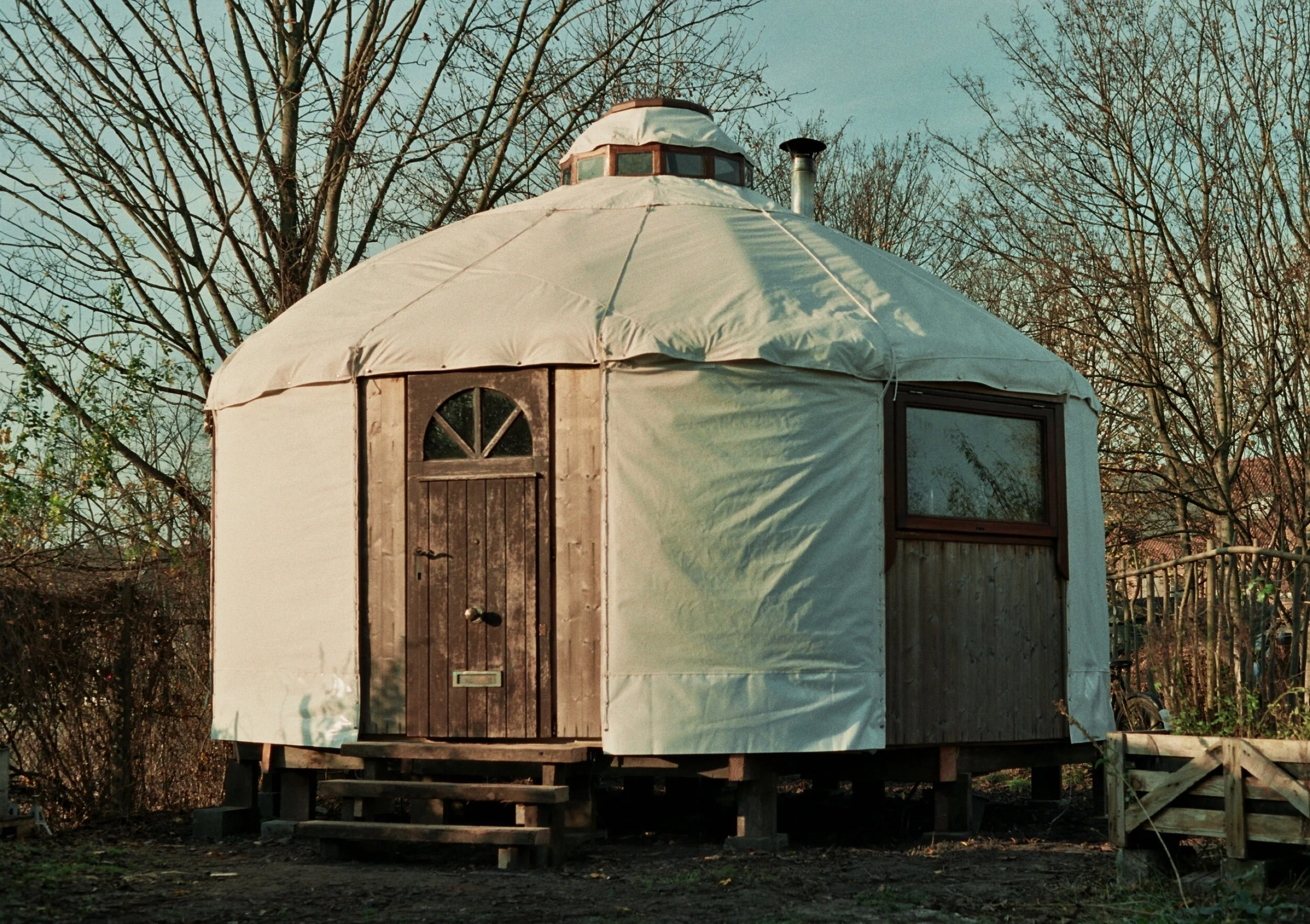
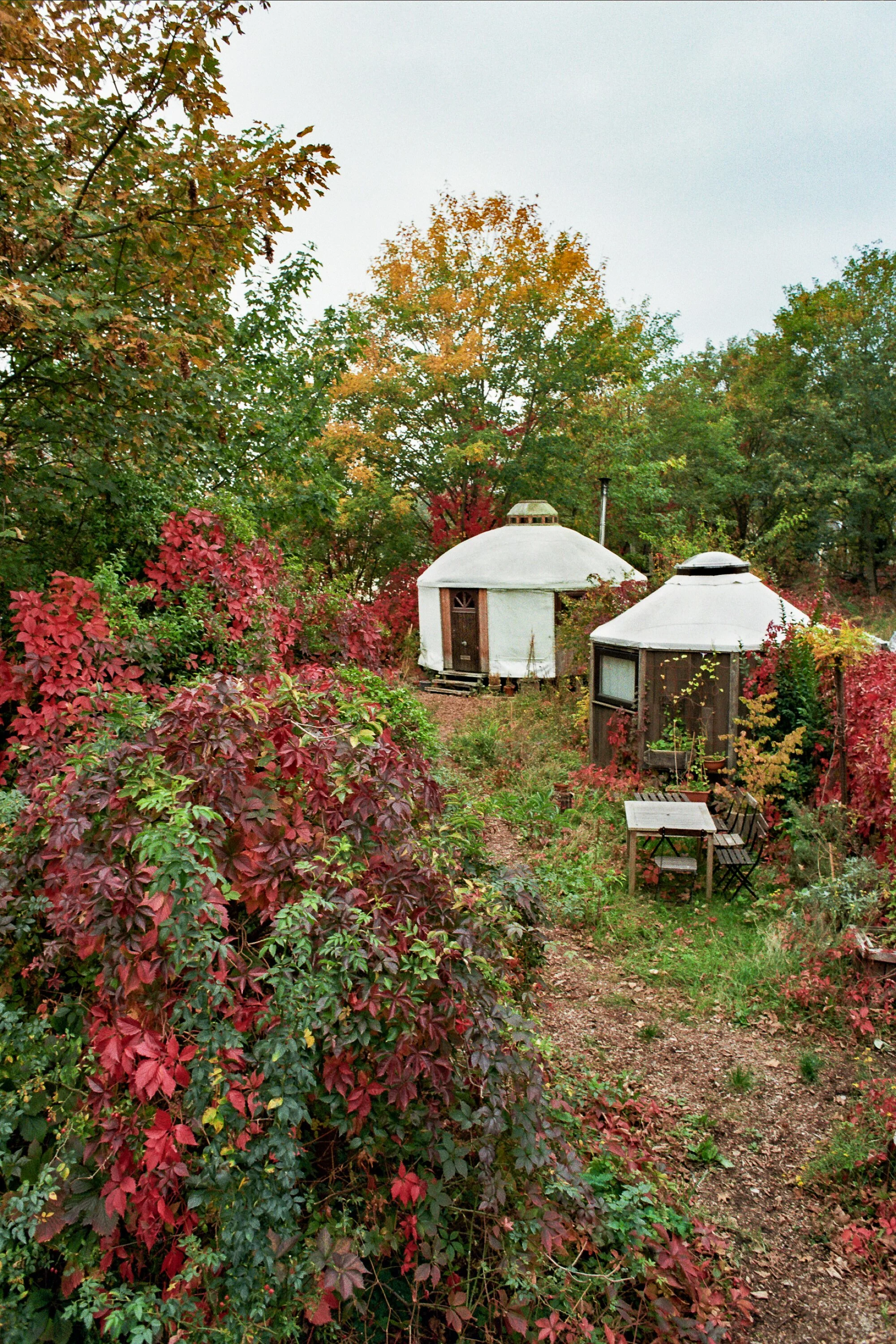
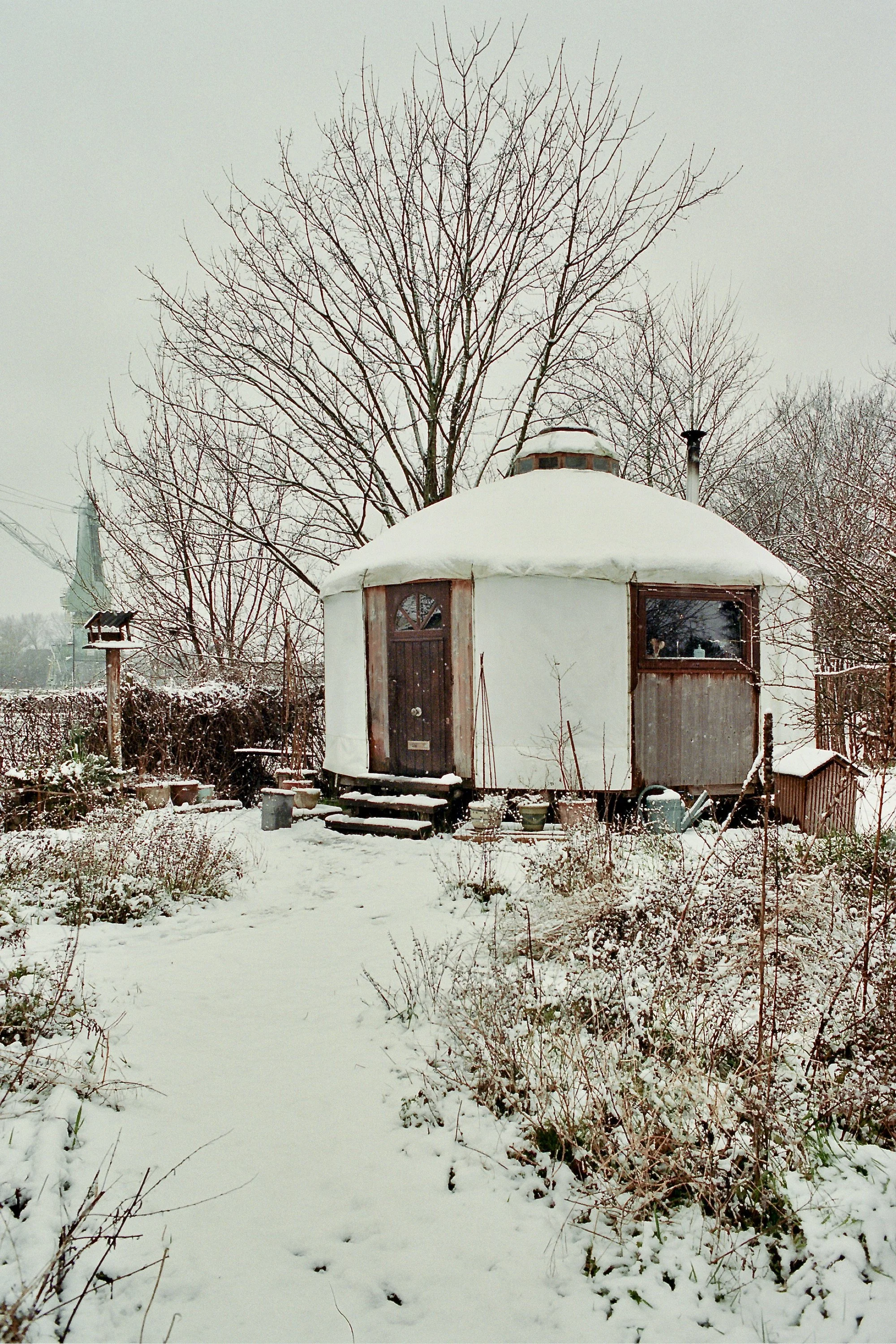
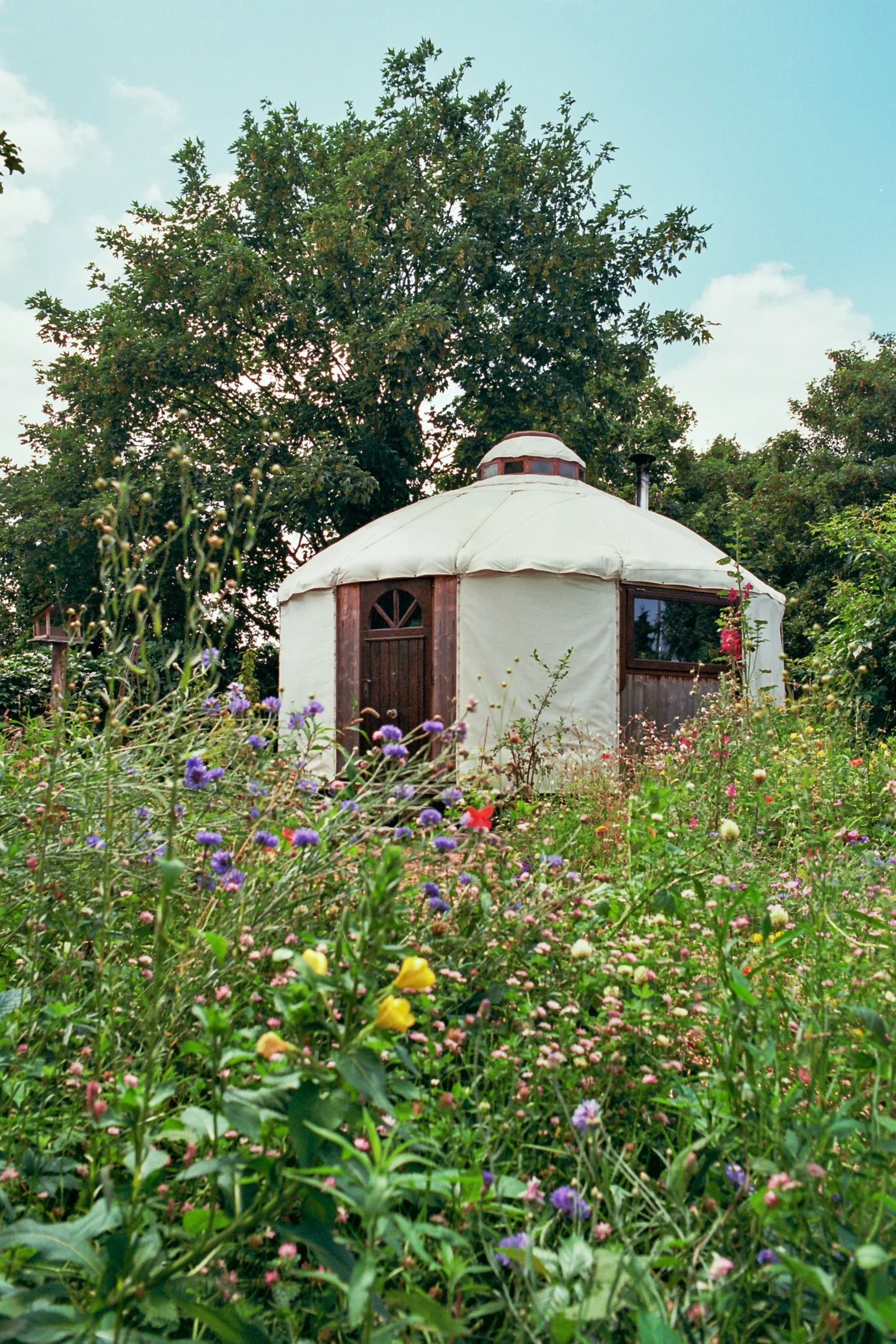
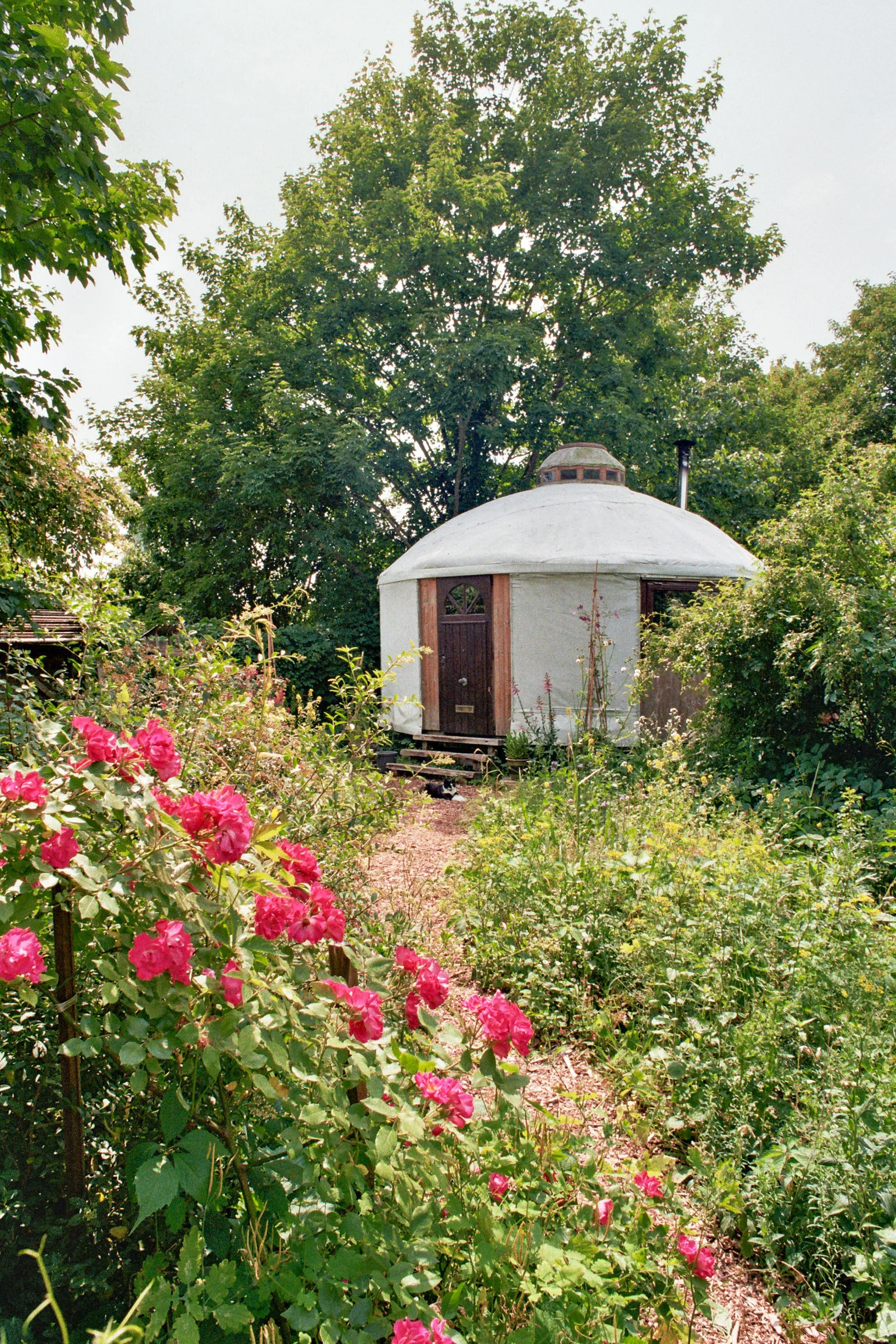
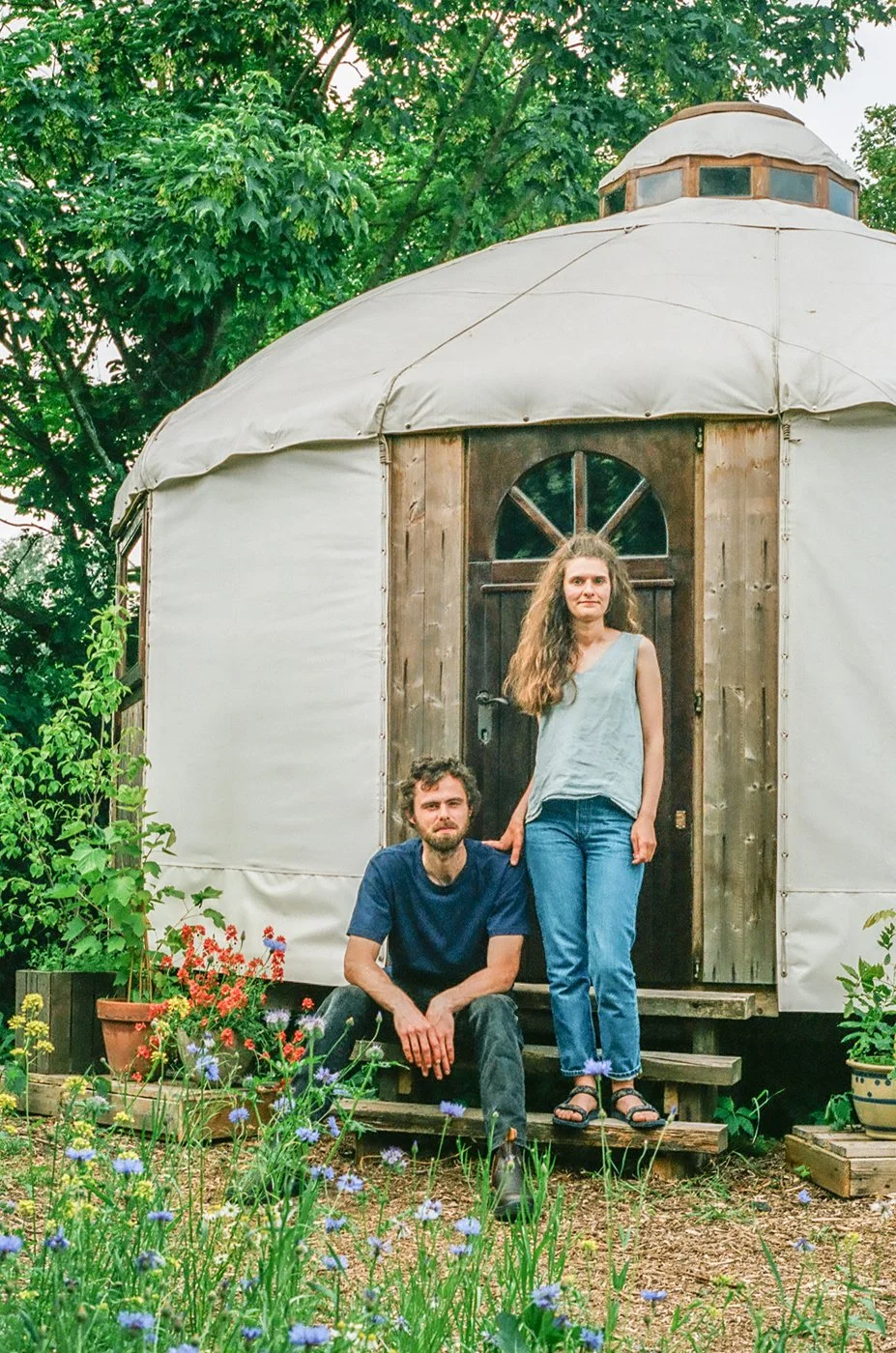
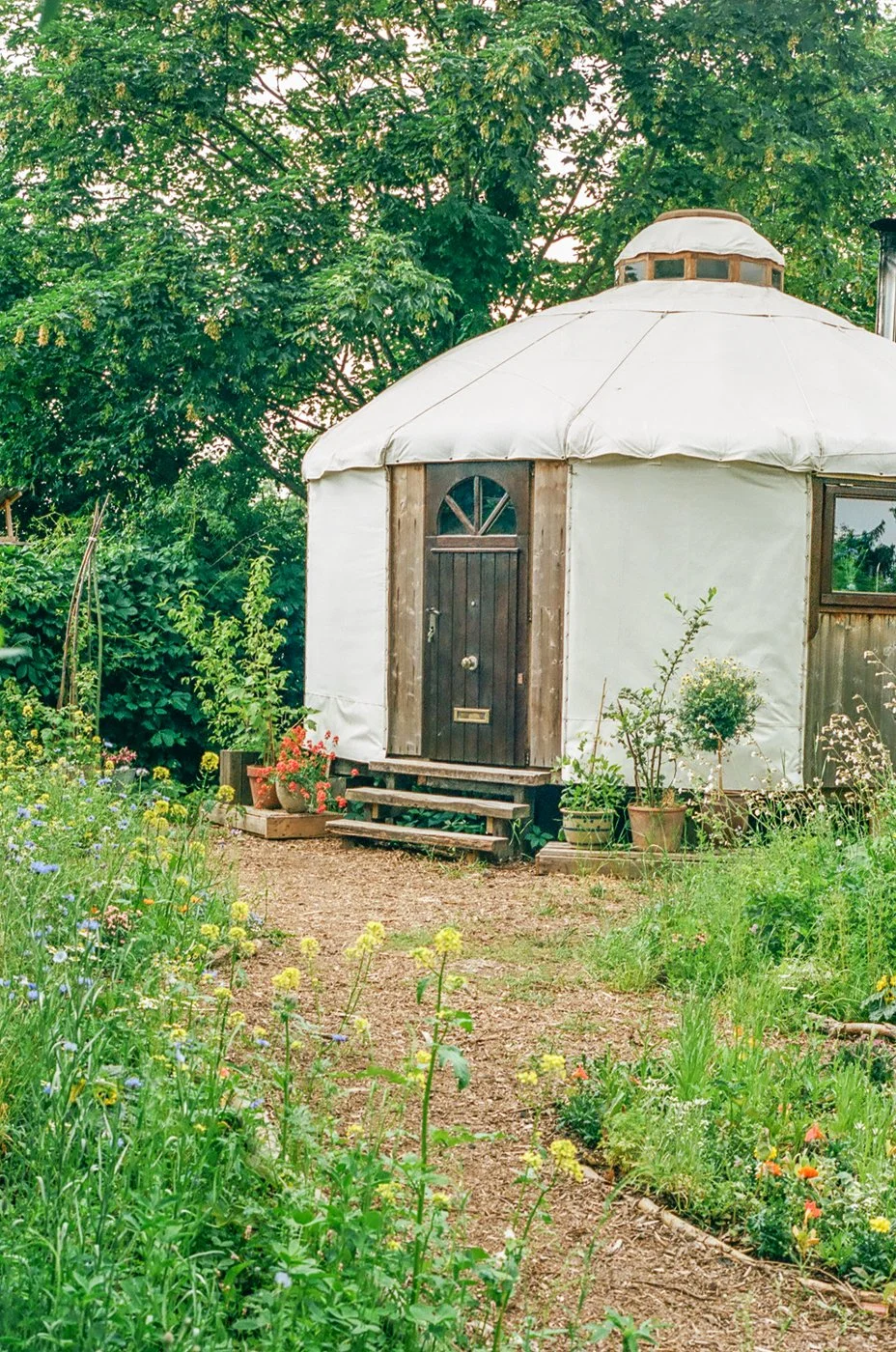
We have lived in the yurt since autumn 2020. Construction began on a temporary site in the former harbour of Ghent during the Covid lockdown.
Two years earlier, we hiked for a month in the Central Tien Shan in Kyrgyzstan, home to many yurts. These friendly round structures, dotted across remote mountain valleys, offered us comfort and cozy tea breaks, and we were were instantly captivated by their simplicity and ingenuity.
Back home, just around the corner from our street, we one day noticed freshly pruned willow pollards about to be discarded. We asked the workers to save them before they were fed into the chipper, and these flexible, lightweight poles became the perfect starting point for our yurt. Freshly cut poles can be peeled easily, making them ideal for building.
Fabric system
Yurts and gers have existed for centuries in Central Asia. Originally covered with felt, yurts could get wet in the rain, but strong winds quickly dried them. In the 20th century, canvas was introduced under the Soviets, and by now most tents have an outer layer of cotton canvas with several layers of felt underneath for insulation. With this setup, yurts withstand strong winds and extreme temperatures, from +40 to -30 °C. In Belgium, however, the milder but more humid climate would cause such yurts to deteriorate and rot quickly, so importing a yurt from Mongolia without adaptation is not feasible.
In our set-up we use four layers of fabric: a light cotton liner, a thick felt layer made from the wool of sheep that graze the island of Texel in The Netherlands, a heavy poly-cotton canvas for water resistance, and a titanspun polyester layer for UV protection. Together, these layers form a breathable, weatherproof envelope. All sewing was done on a Pfaff 138 straight and zig-zag lockstitch machine from West Germany.
Frame & Flooring
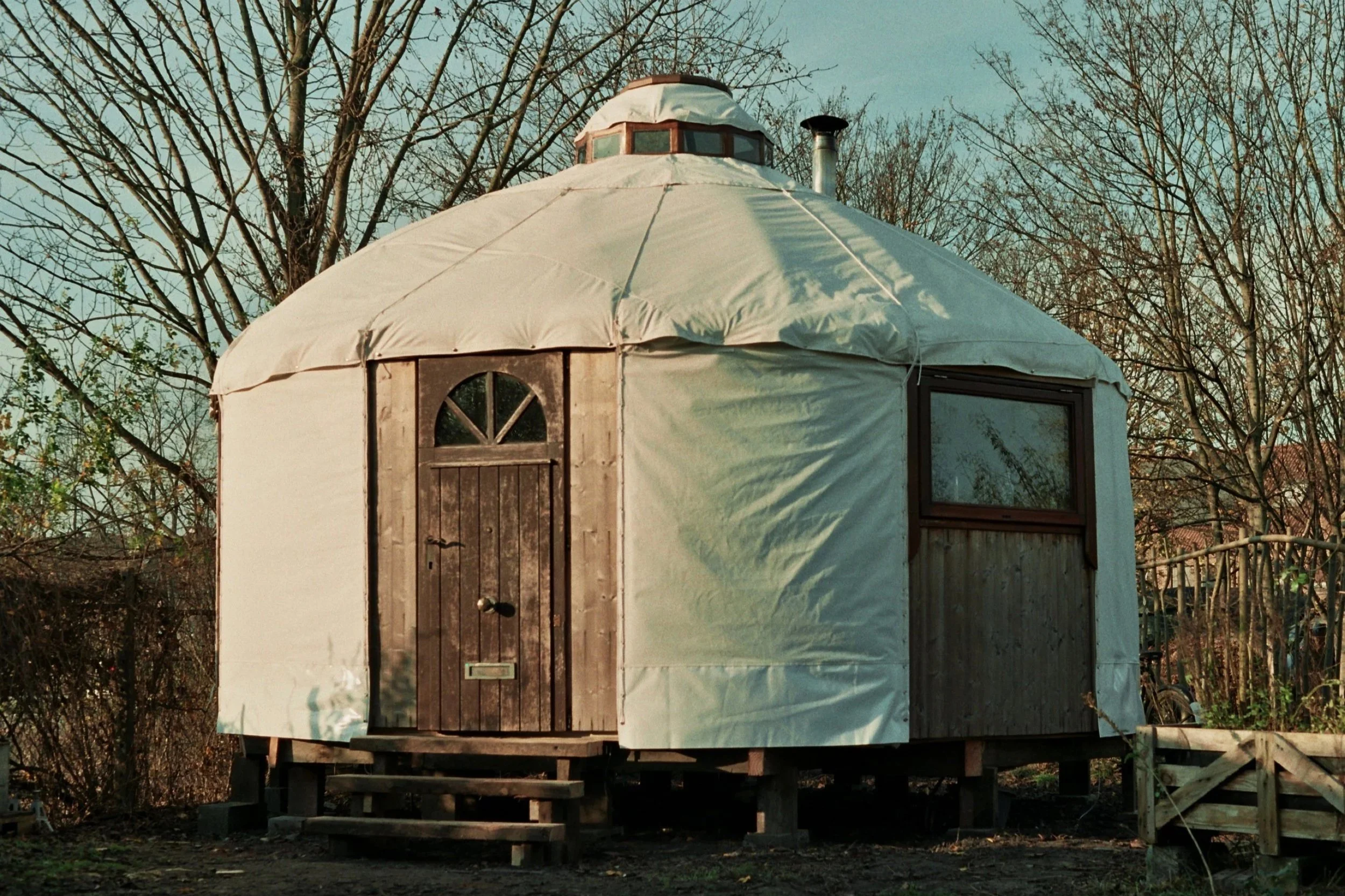
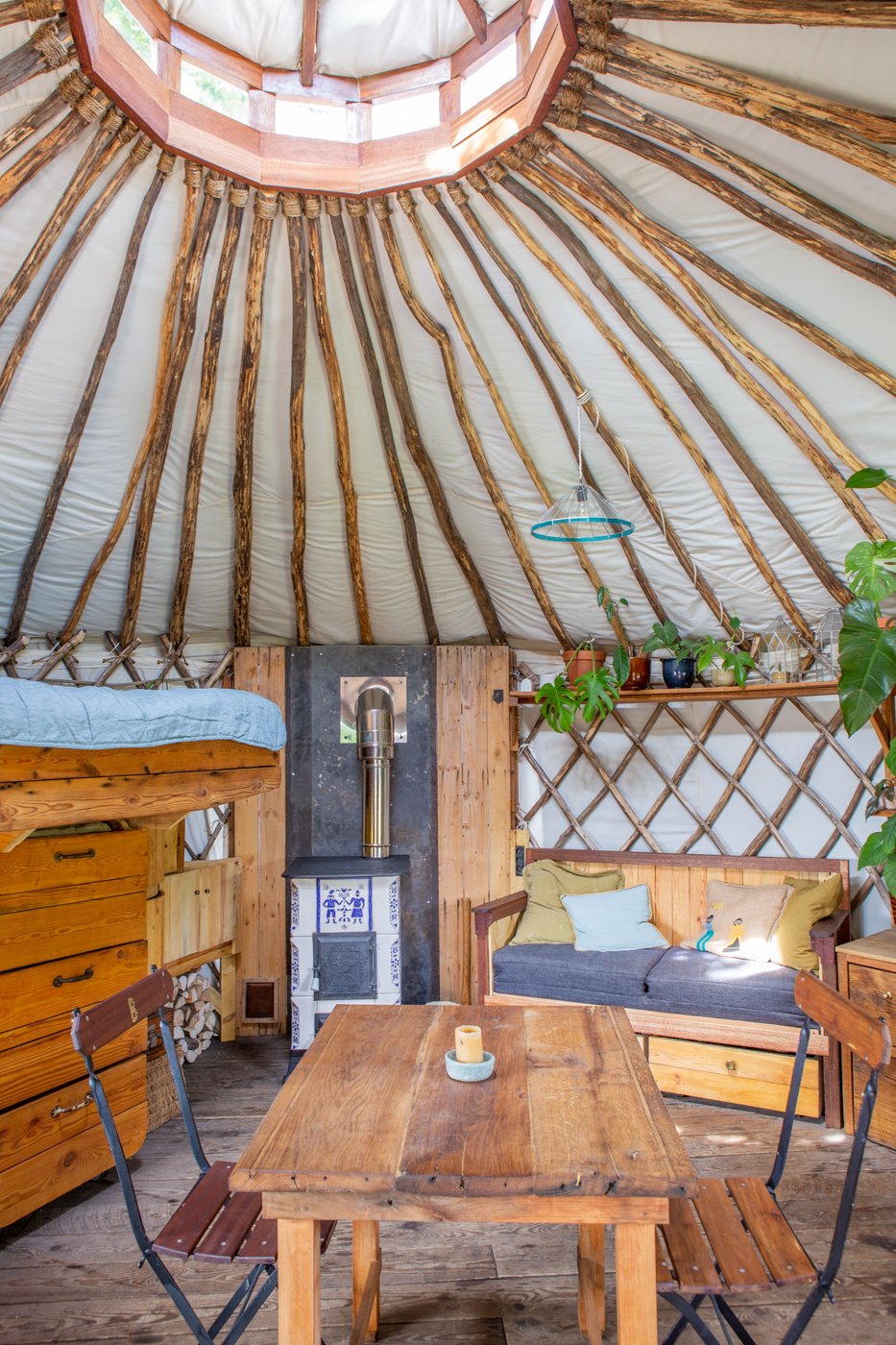
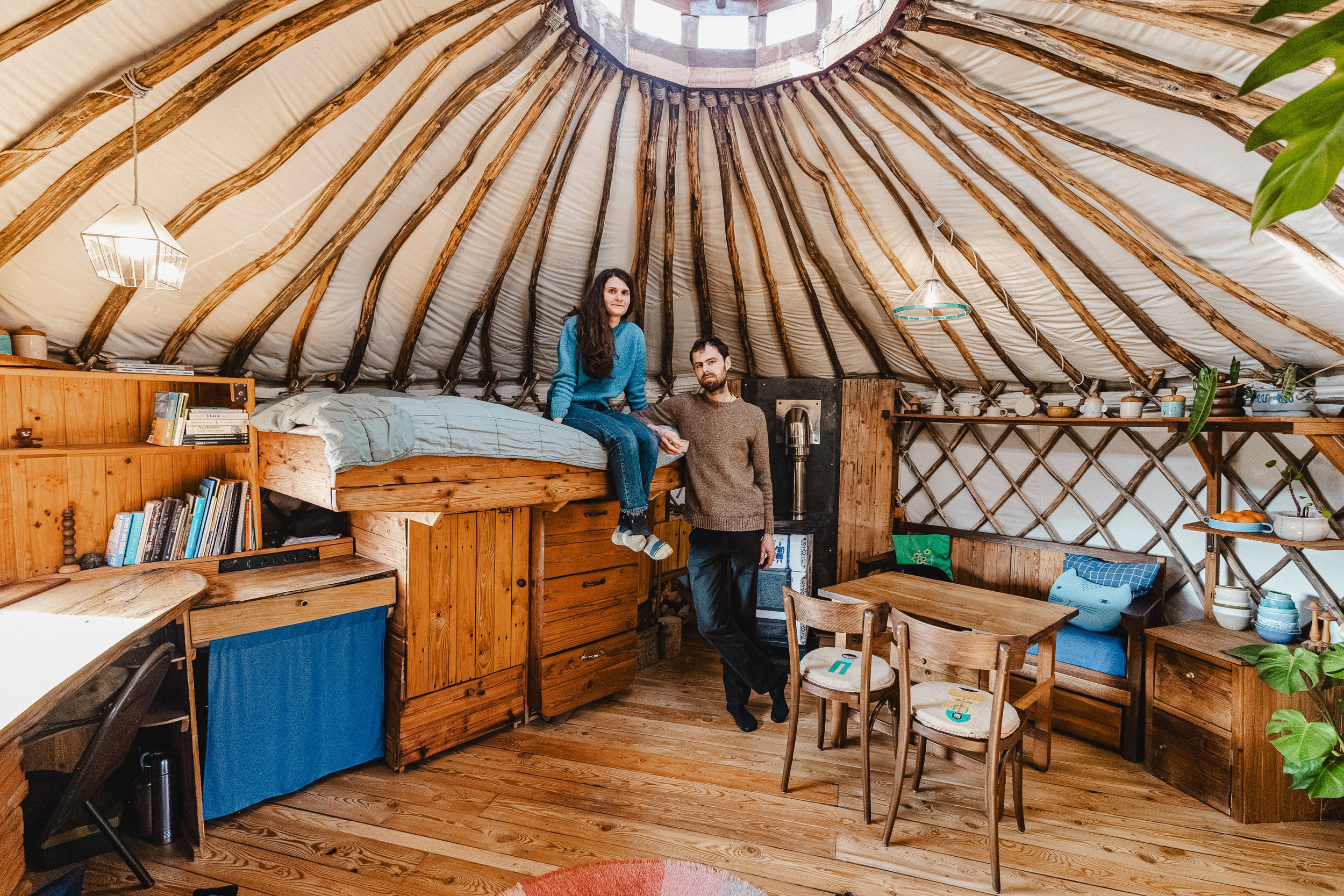
The living yurt measures 5m in diameter (≈20 m²).
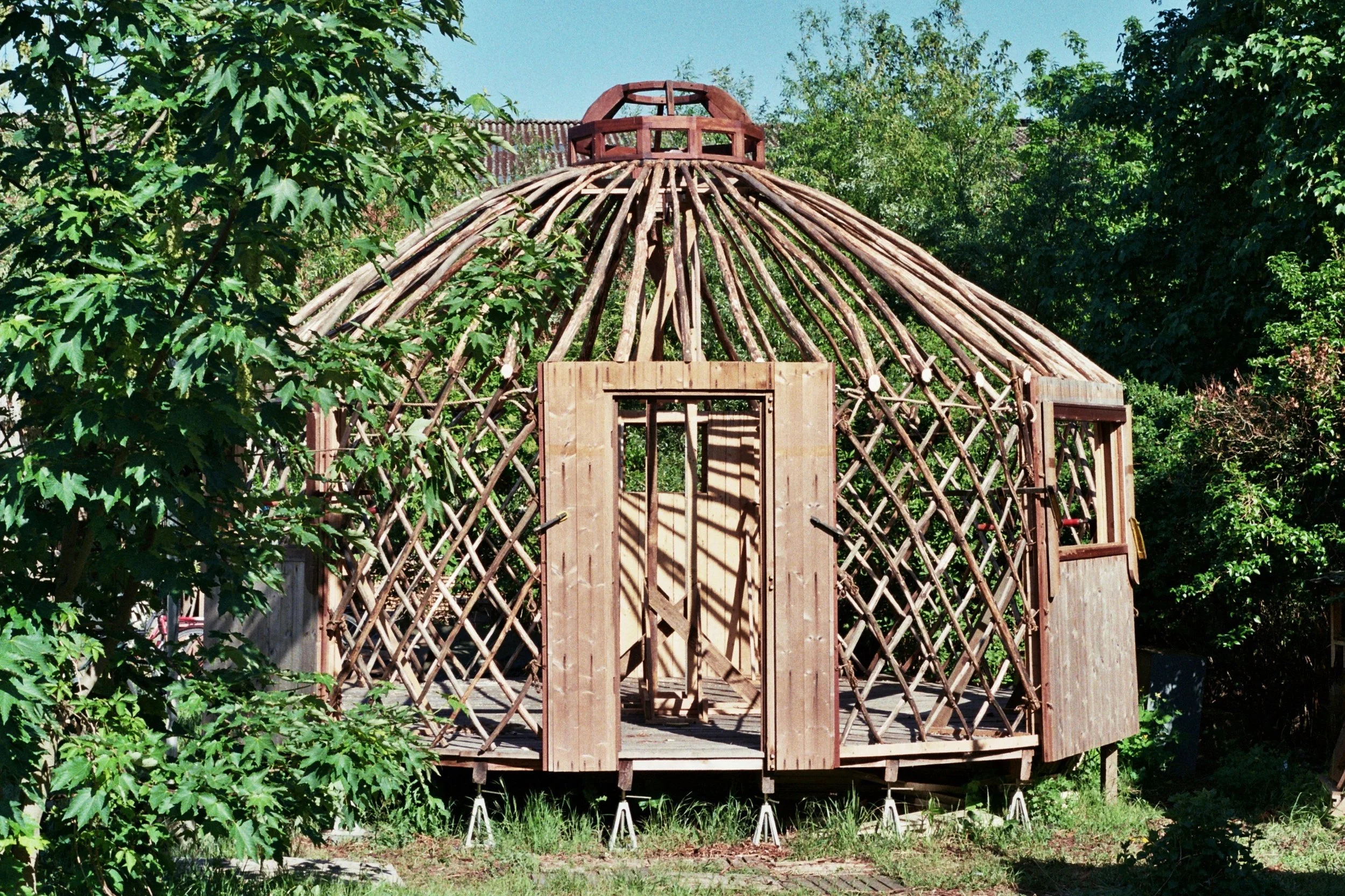
The wooden frame that supports the fabric in traditional yurts is optimised for nomadic life on the steppes. It is lightweight and incredibly quick to put up and break down. For our yurt, we adapted the walls and crown to let in more light and improve ventilation, making assembly slower but more functional.
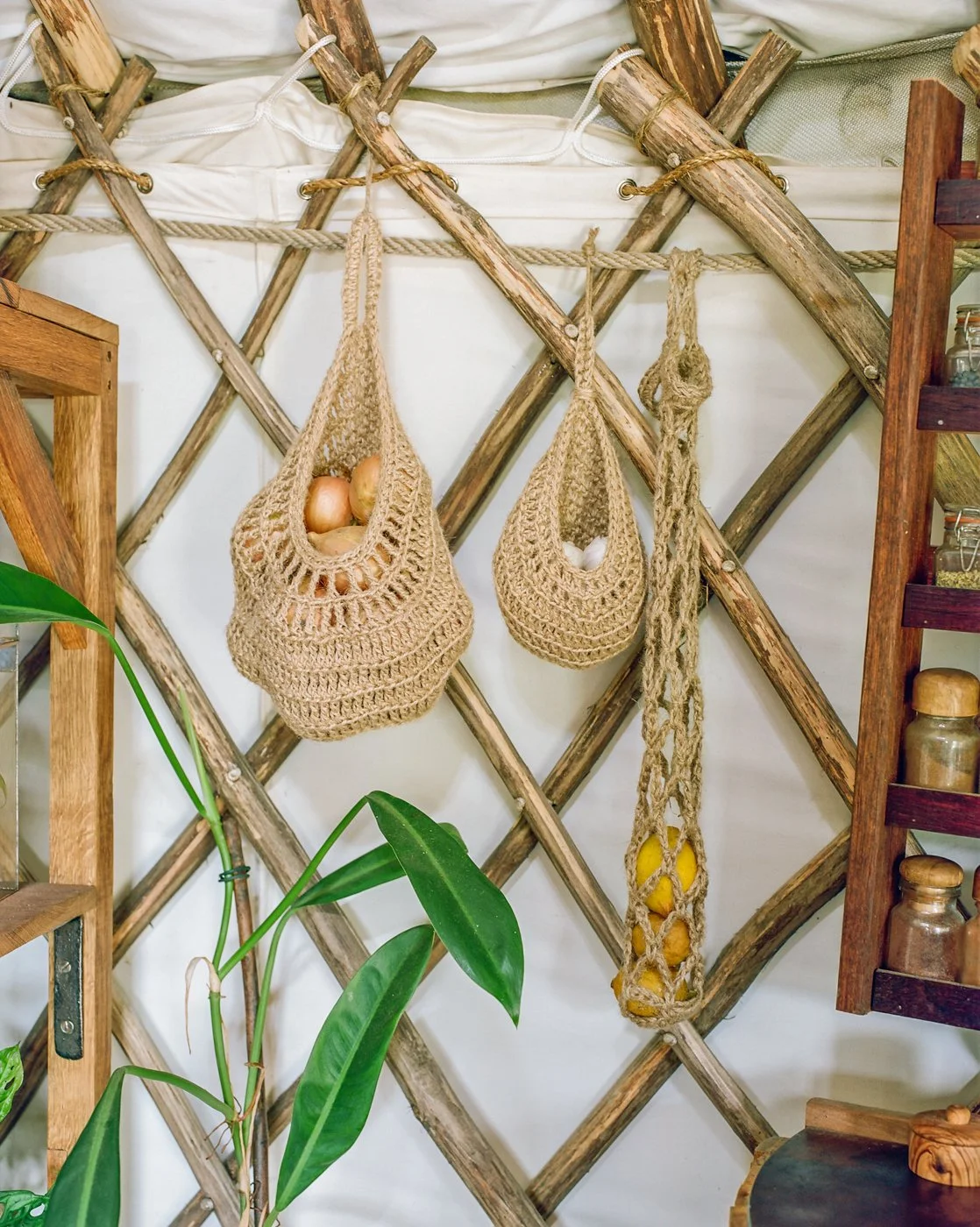
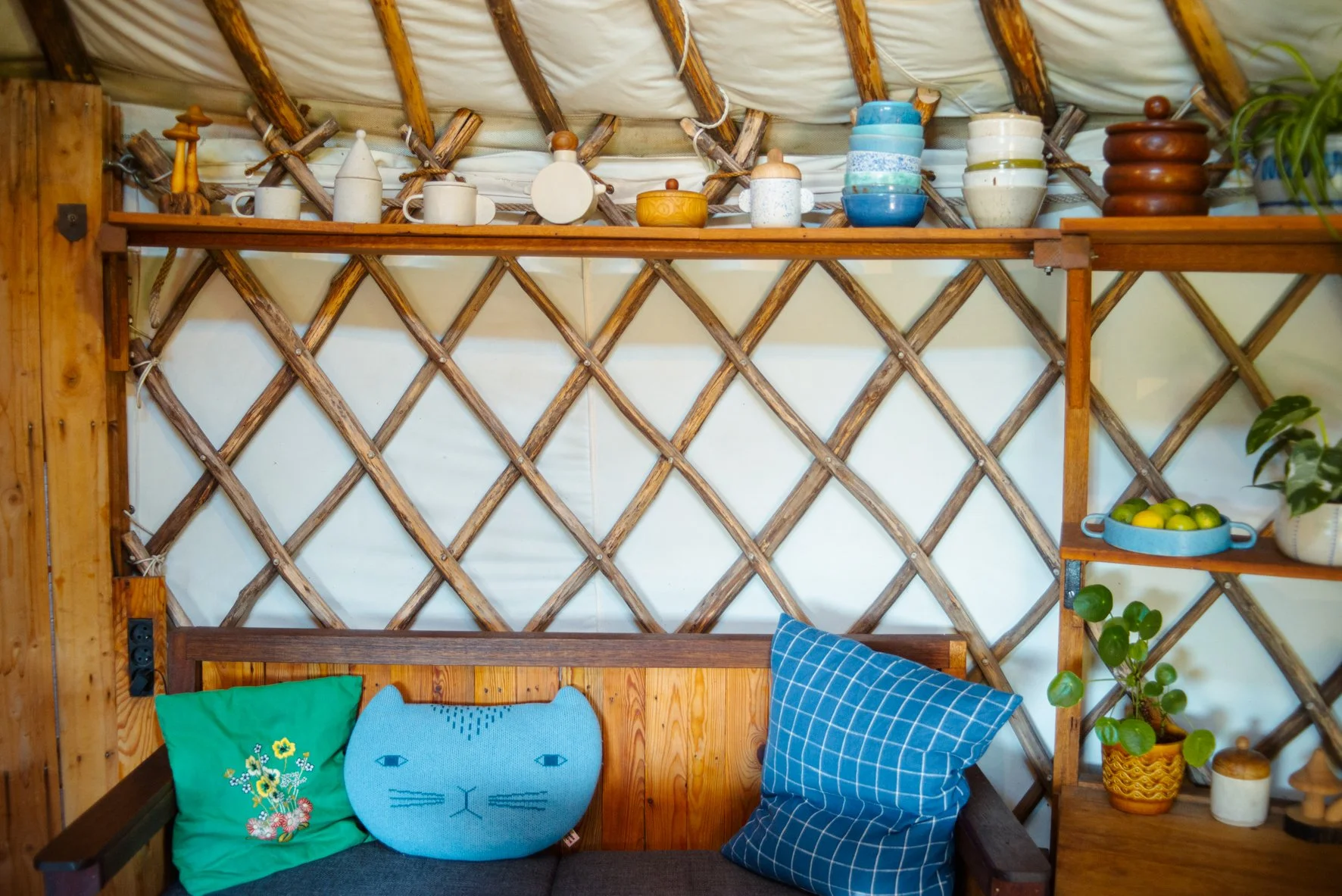
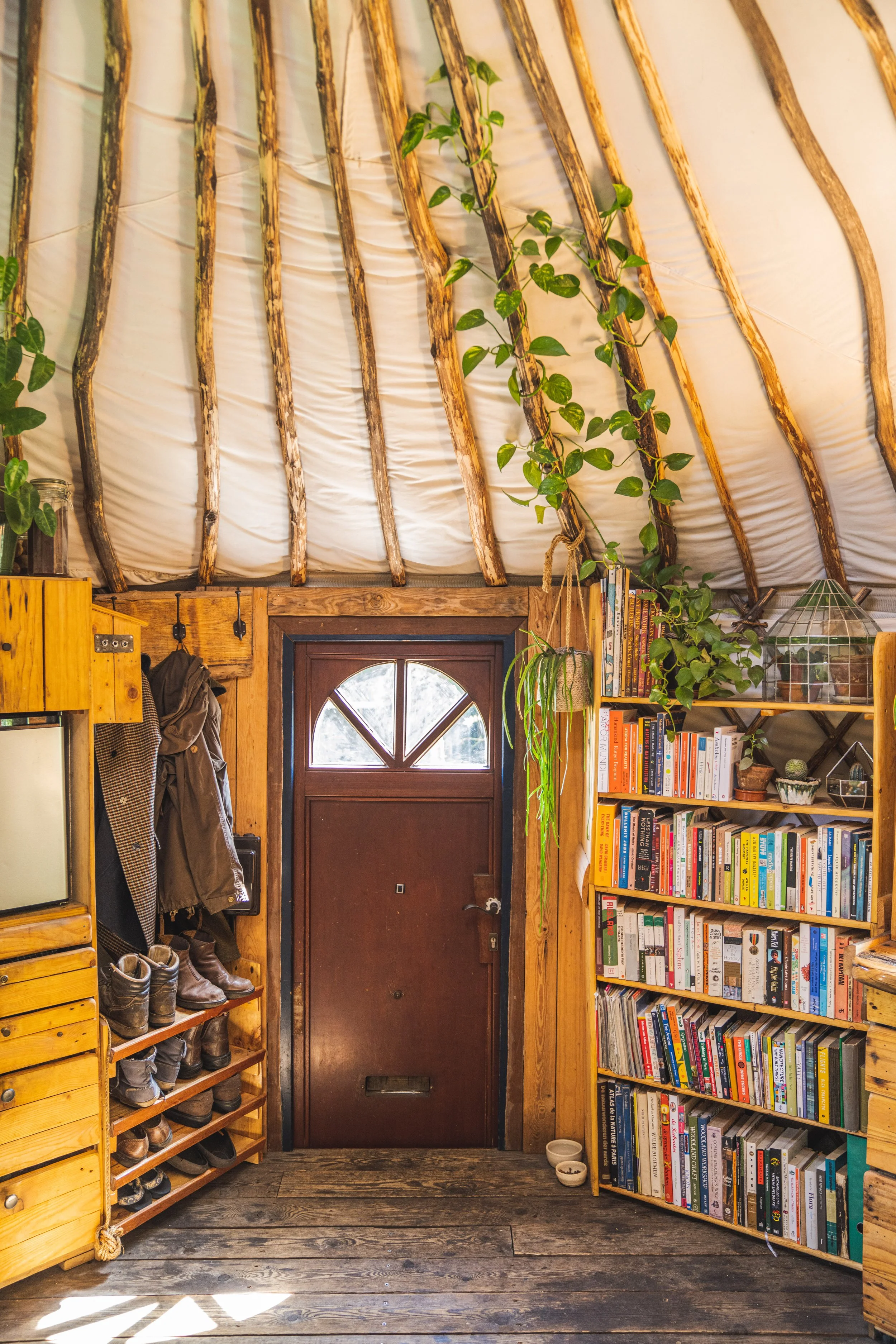
Our walls are built in four khana sections plus four panels carrying the door, two double-glazed windows, and the stove pipe. Trellis frames are made from willow poles tied at intersections with polypropylene rope; ends are knotted and burned for flexible joints. Peeling the willow poles was labor-intensive, so friends joined in what we called a ‘willow peeling party.’ The windows and door were scavenged from a local renovation container, a regular source of materials.
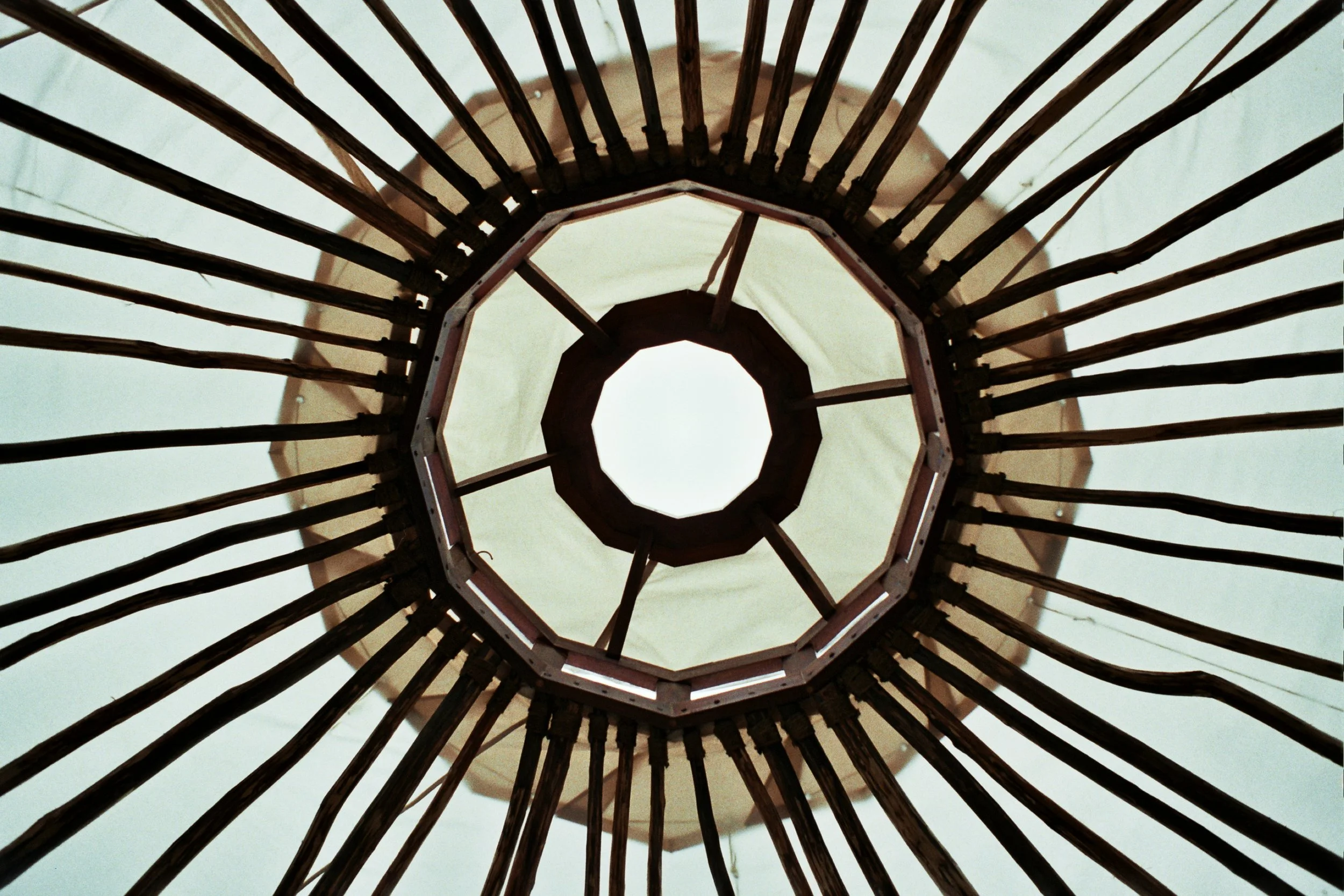
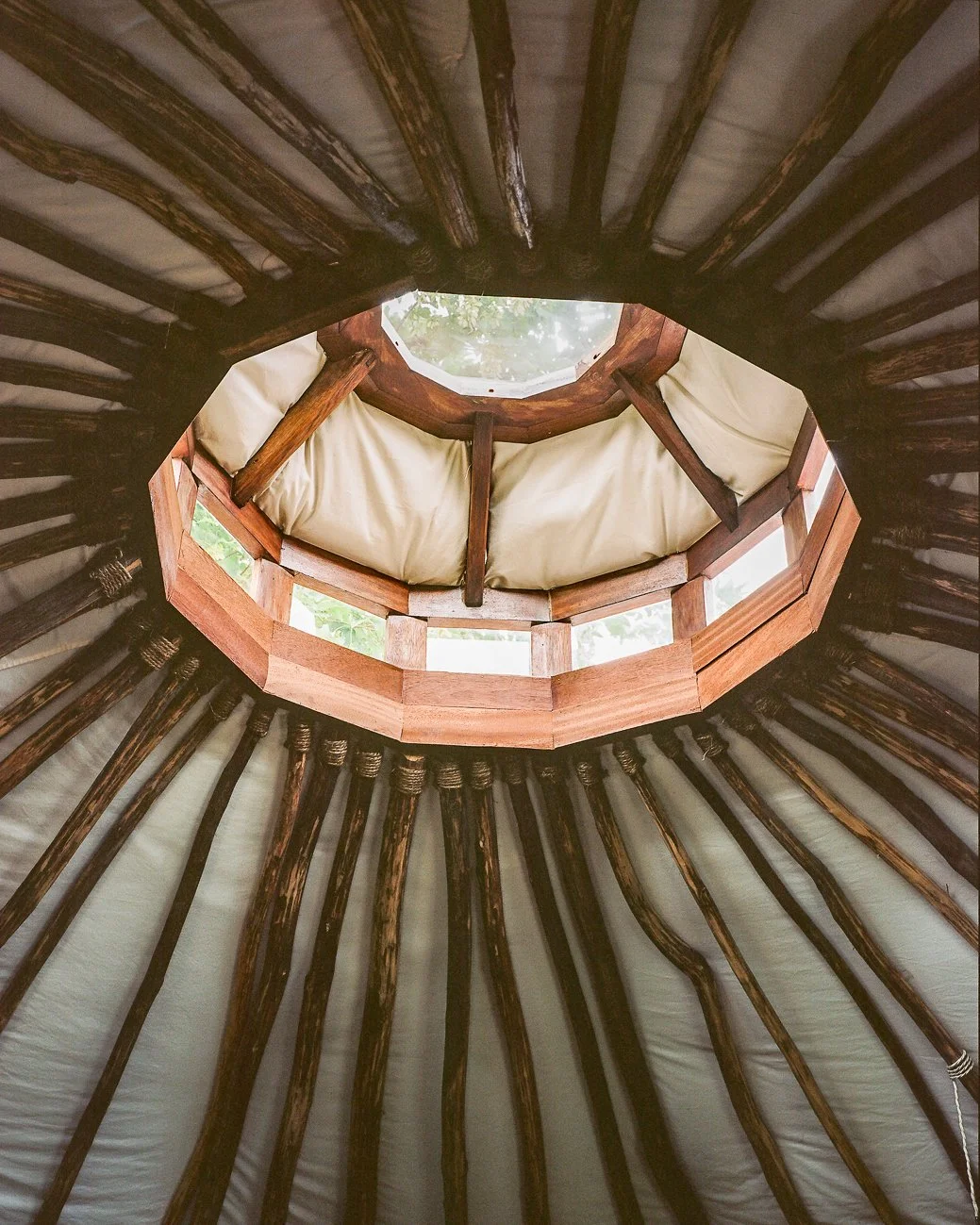
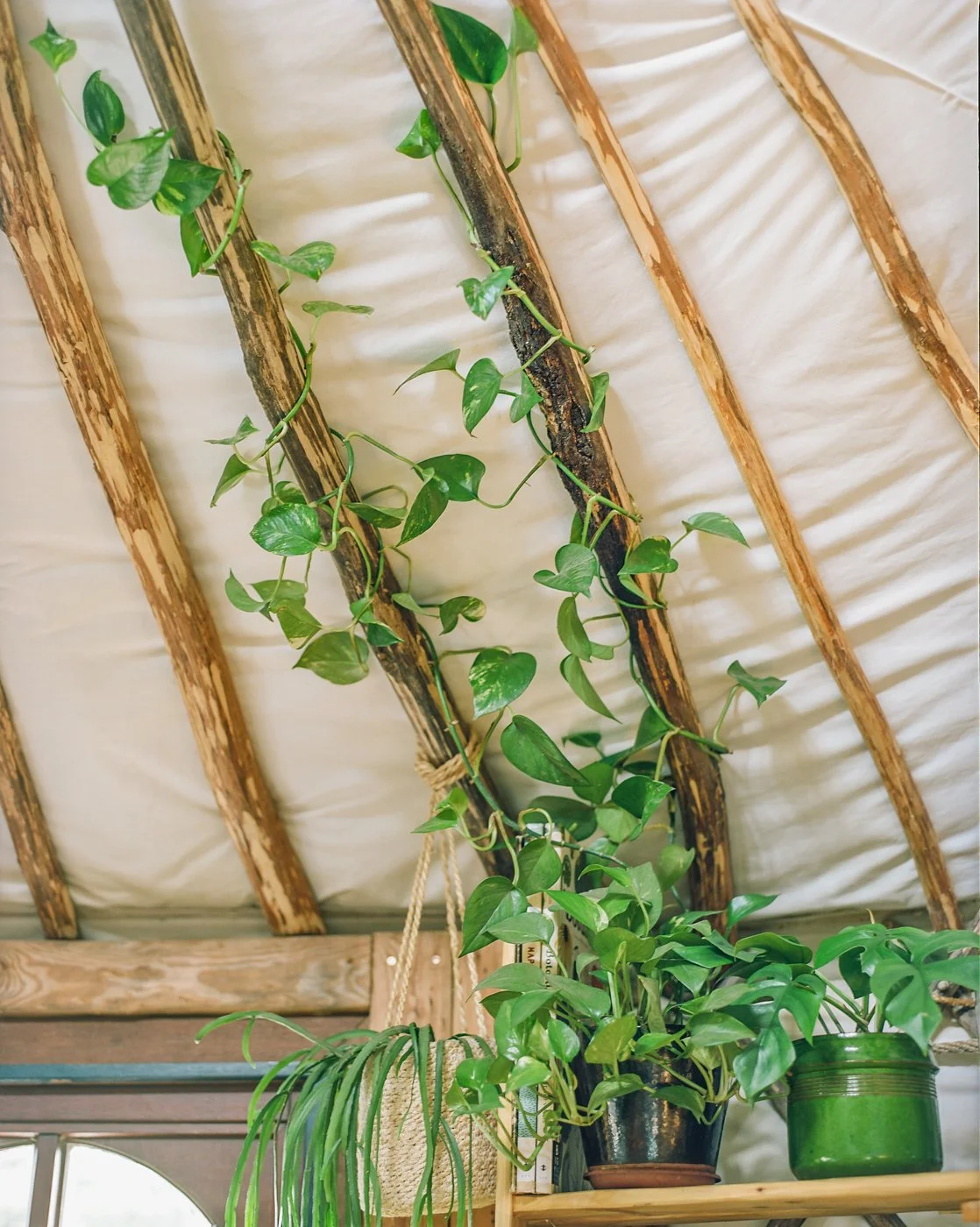
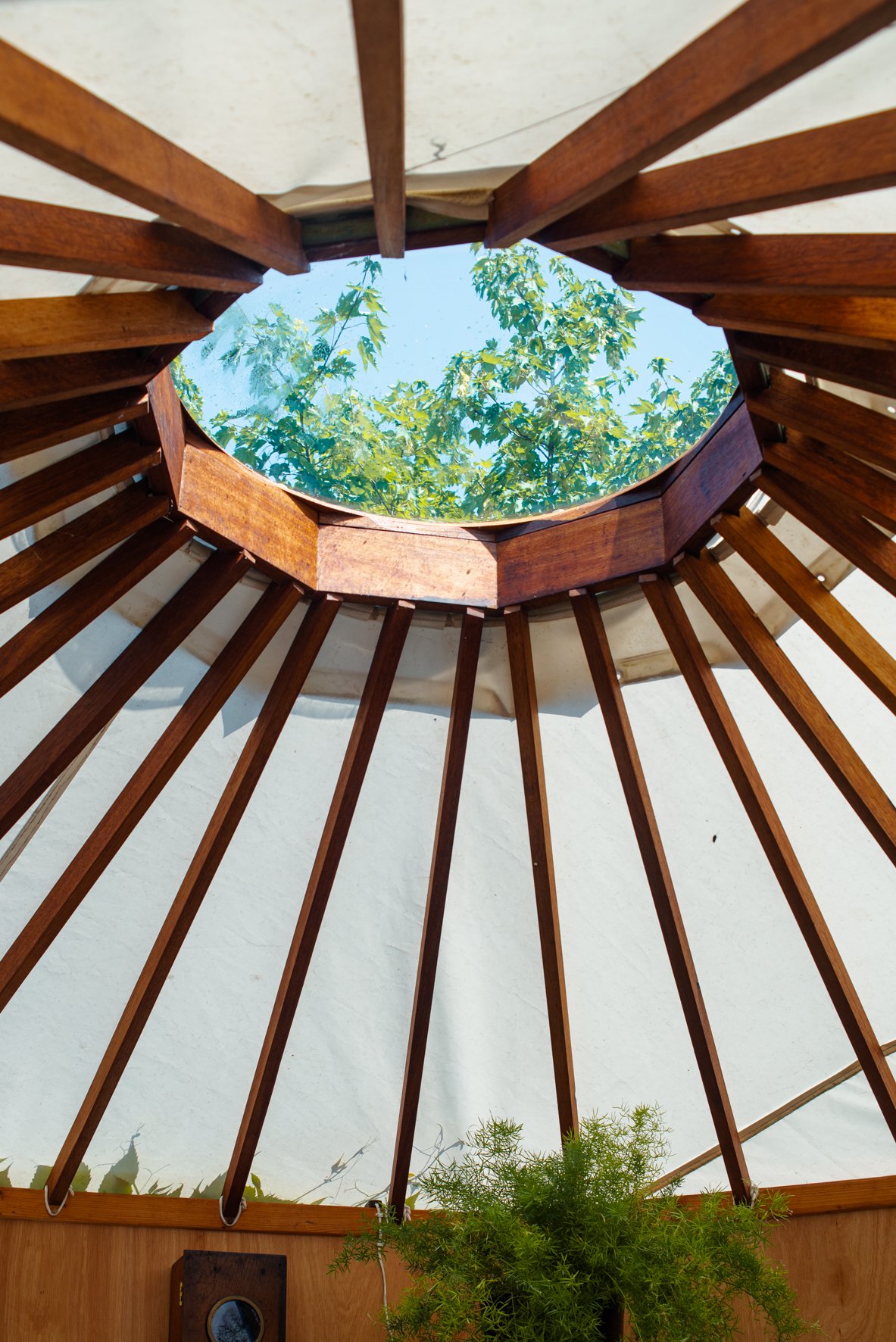
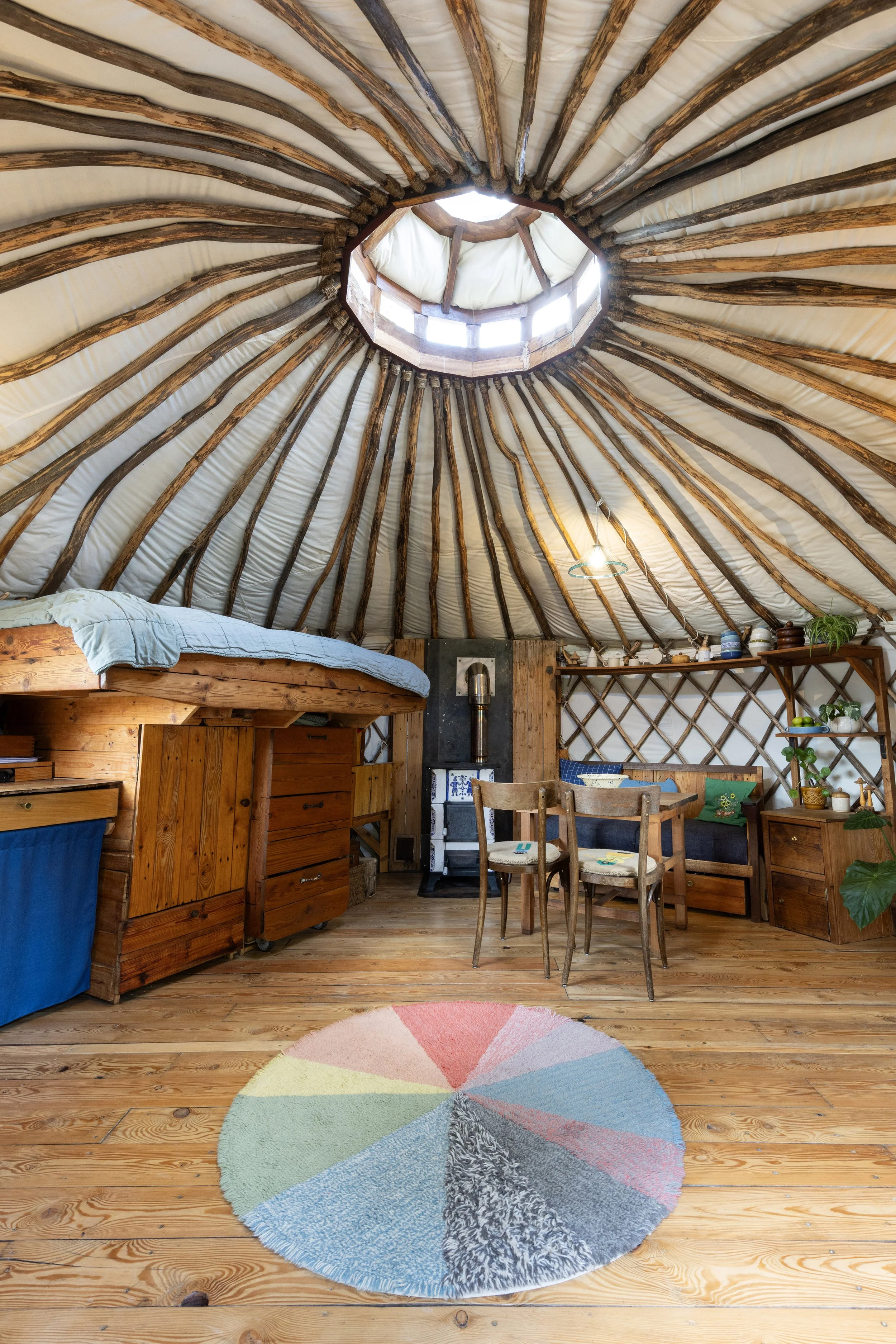
At the top of the structure, where all the roof poles meet, stands the crown (or toono). We designed ours to accommodate one large operable window on top and twelve smaller windows around the sides. In Turkic yurts, steam bending is commonly used to create extra headroom near the walls. In our case, this was unnecessary, as we simply selected willow poles with the right natural curvature. The considerable weight of the roof poles, toono and fabric pushes the walls outward. This outward movement is restrained by a tension band that encircles the yurt at the point where the walls meet the roof poles. Without the band, the entire structure would collapse. We used an old polyester firehose as the tension band, cutting it open, sewing hems along the edges, and attaching hooks at both ends.
We decided to build the yurt on a platform, reducing its compactness and transportability. The platform consists of a recycled beam frame, a layer of betonplex, 12 cm PIR insulation, and reclaimed wooden planks salvaged from a demolished bank building.
Interior
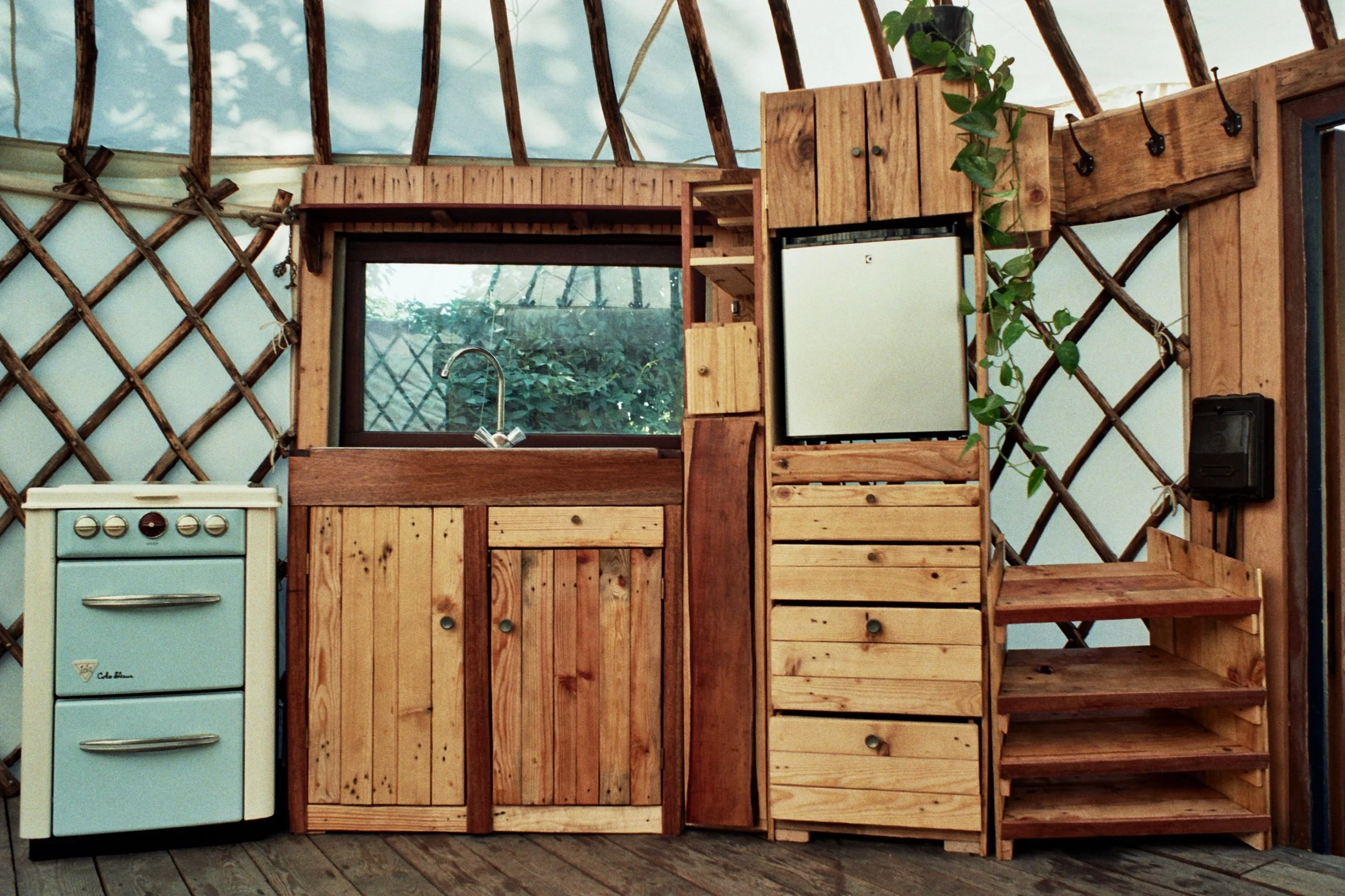
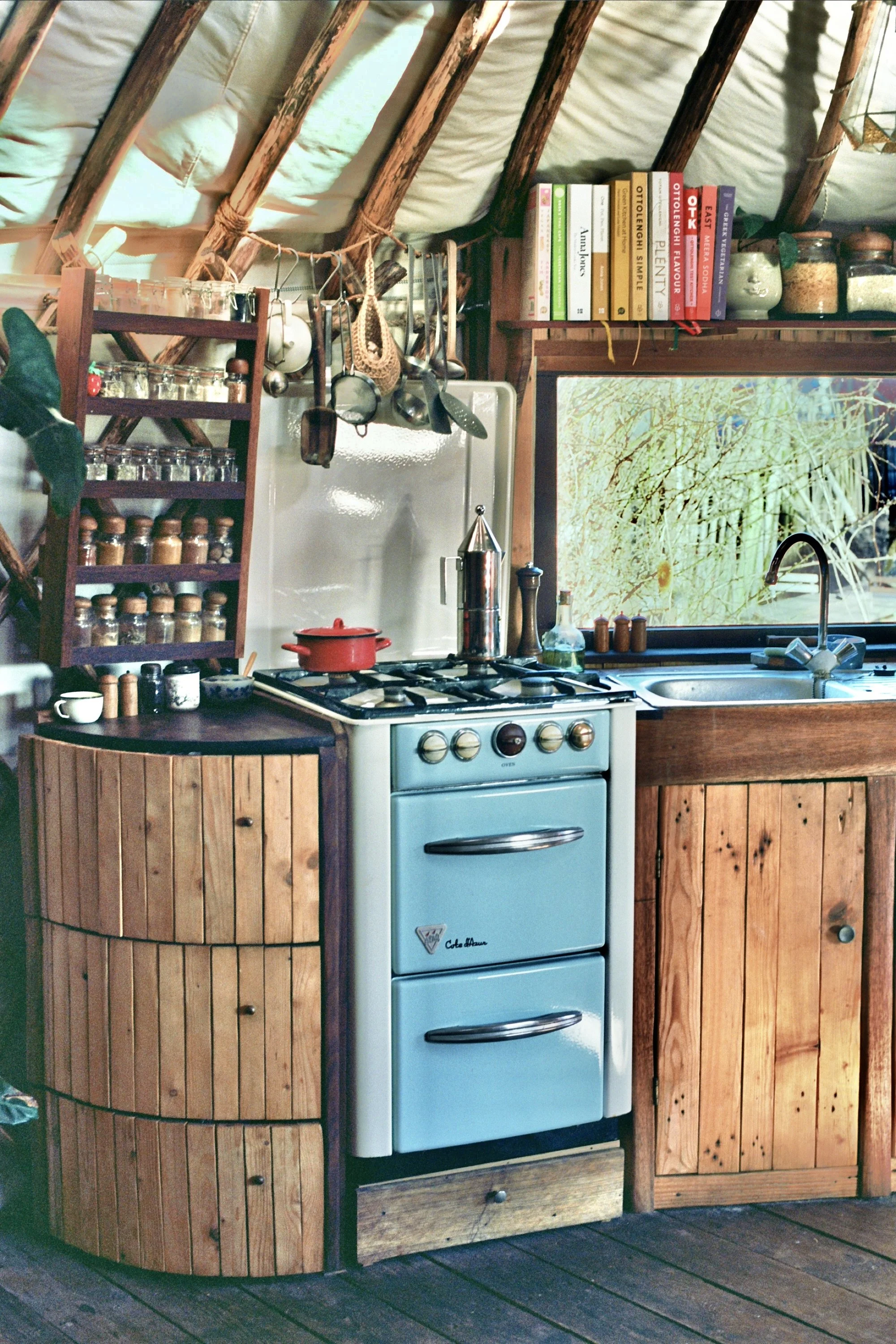
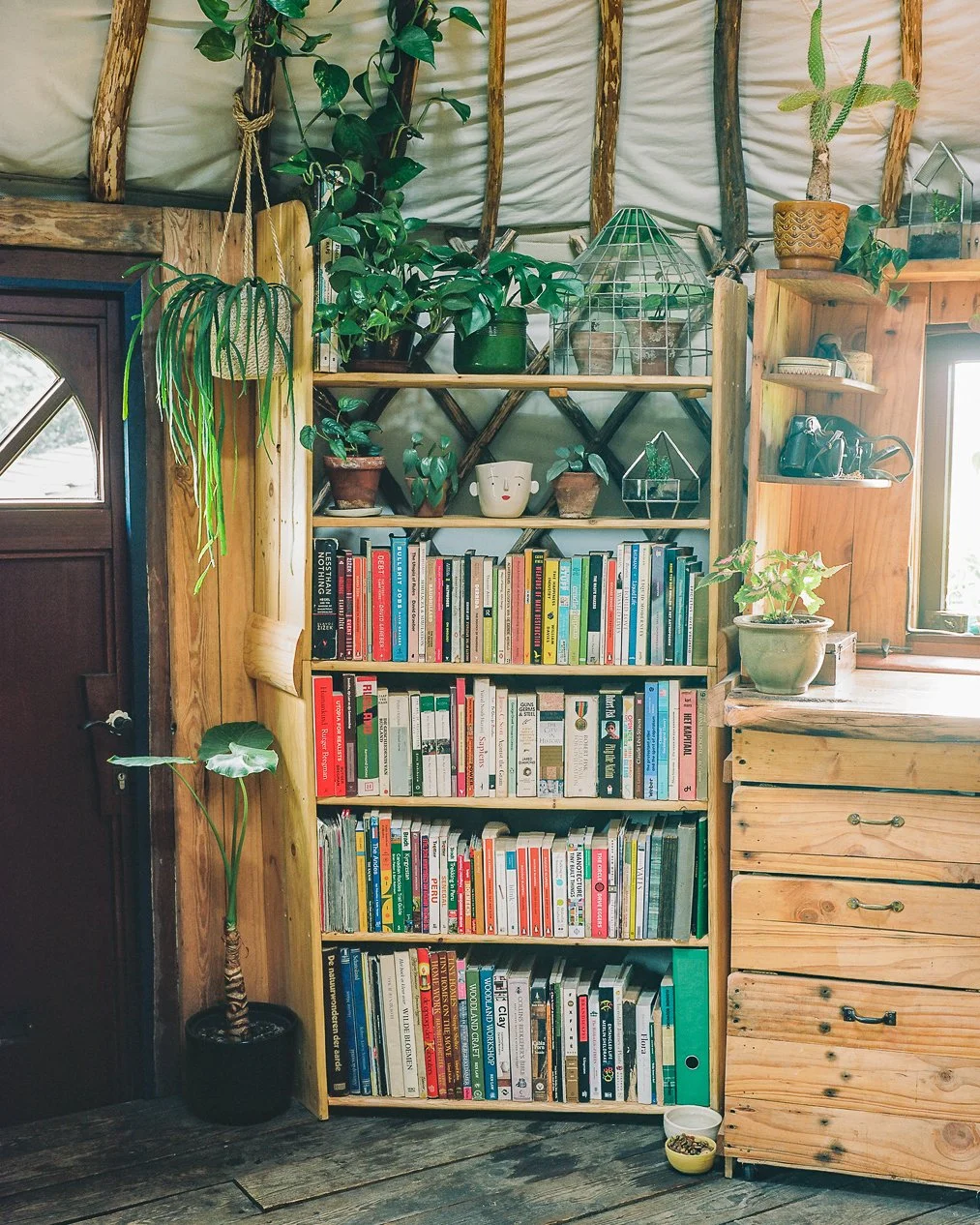
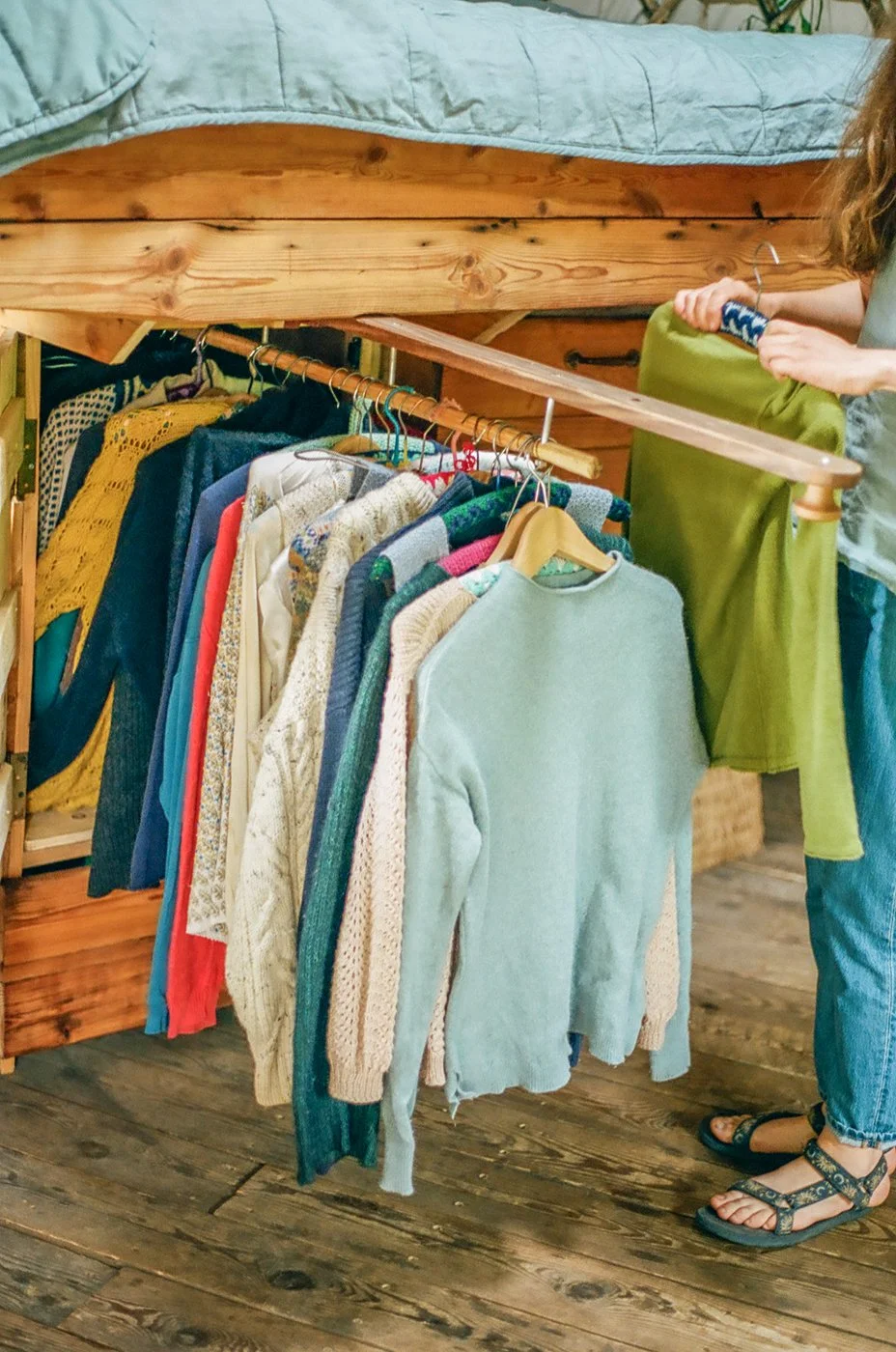
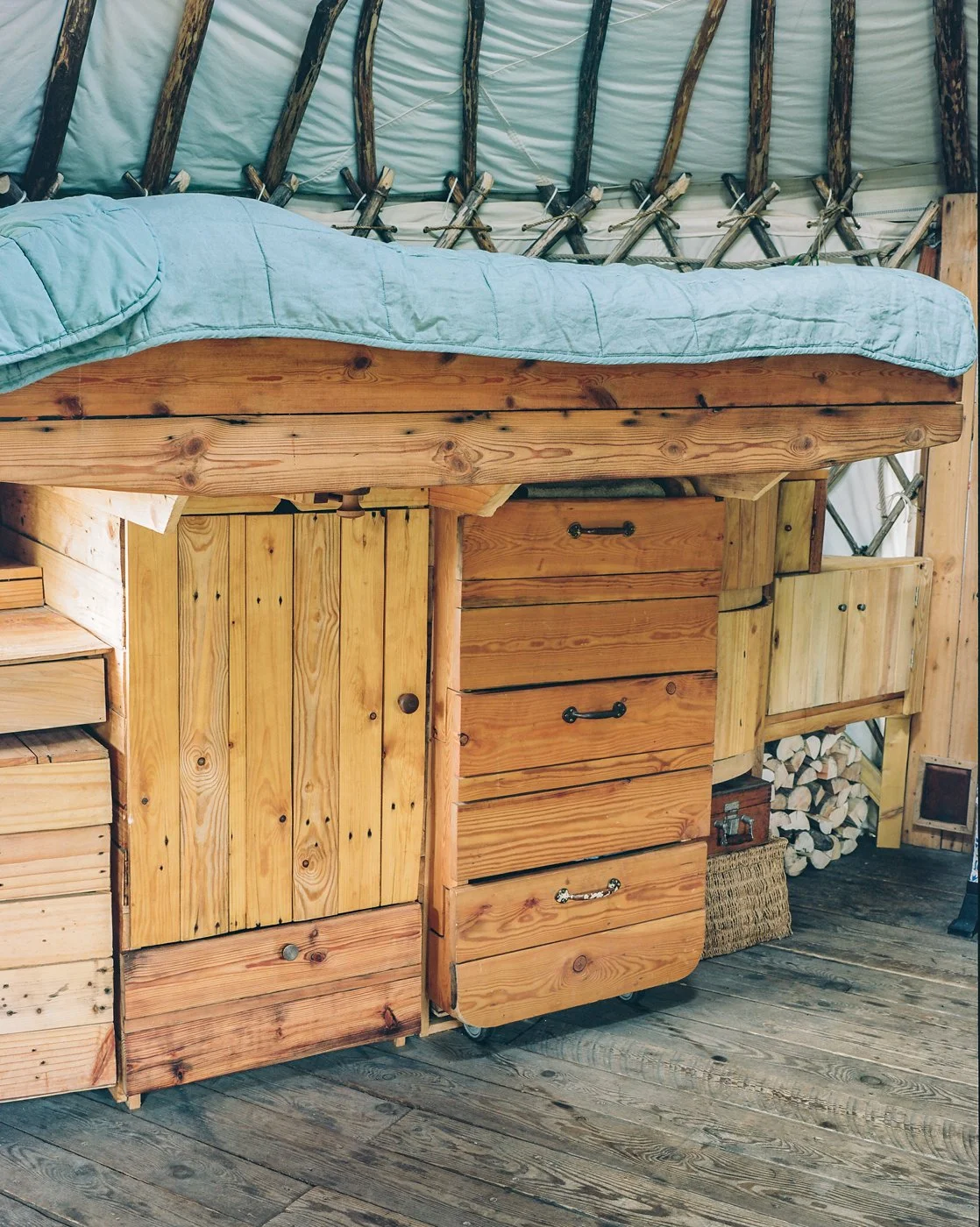
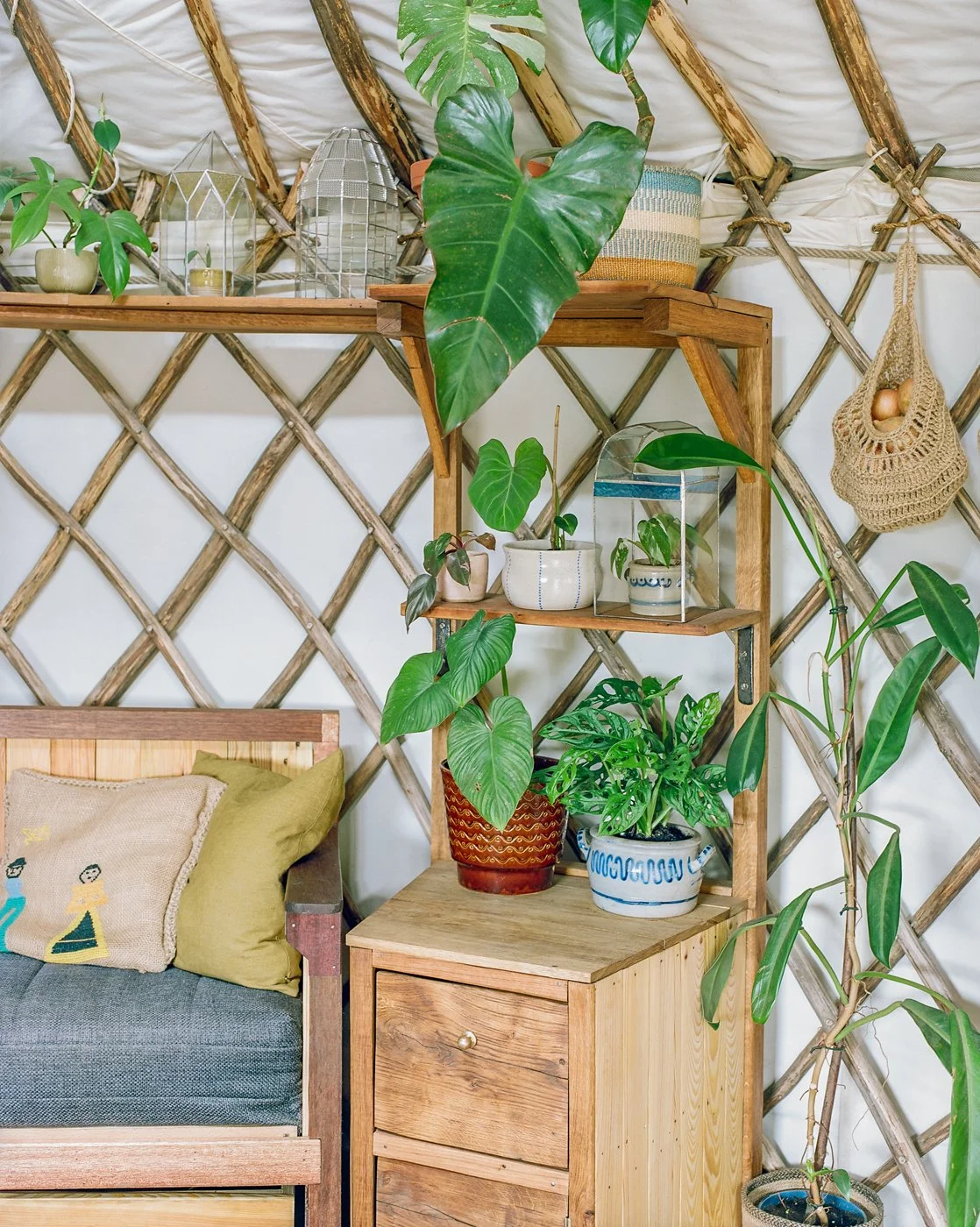
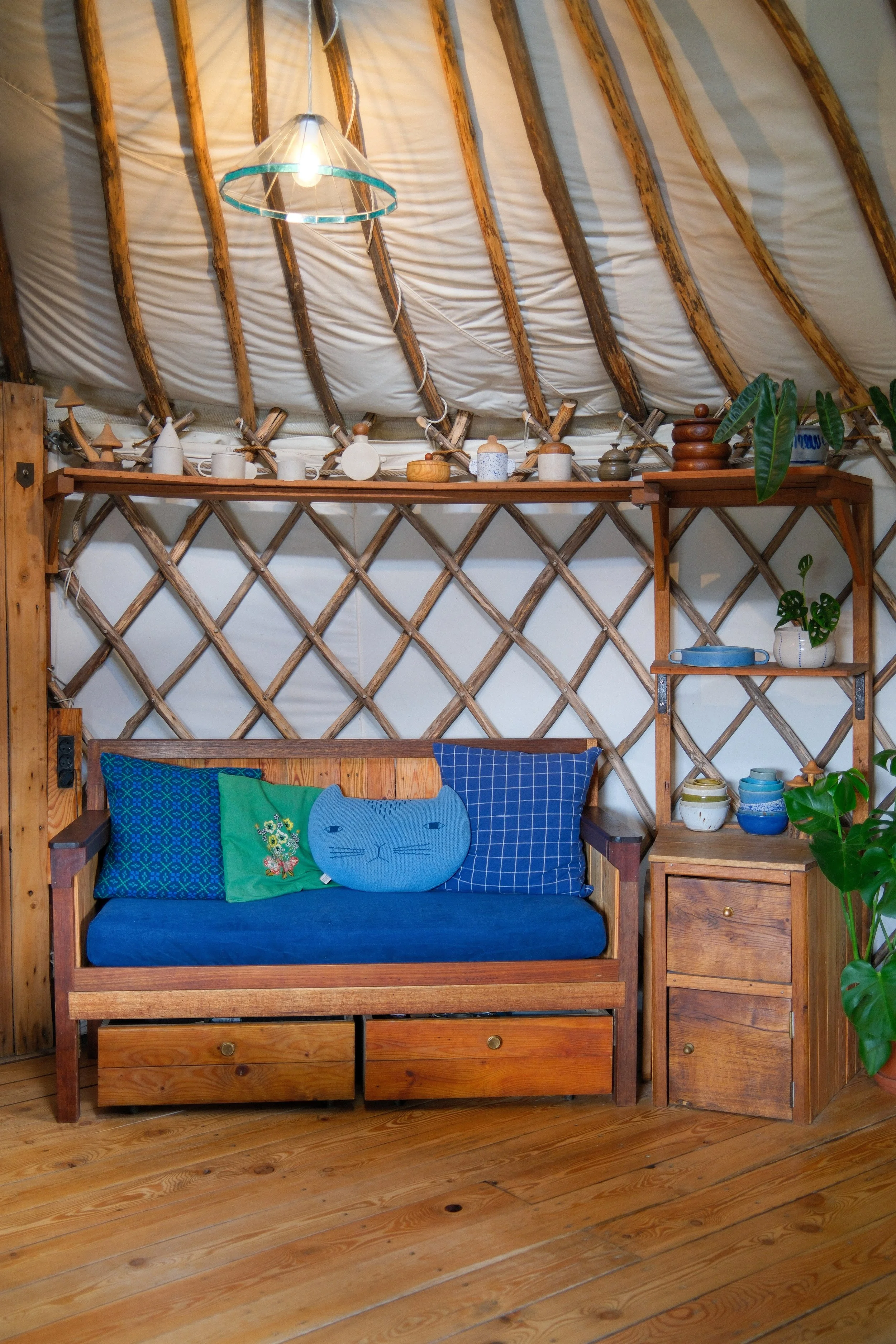
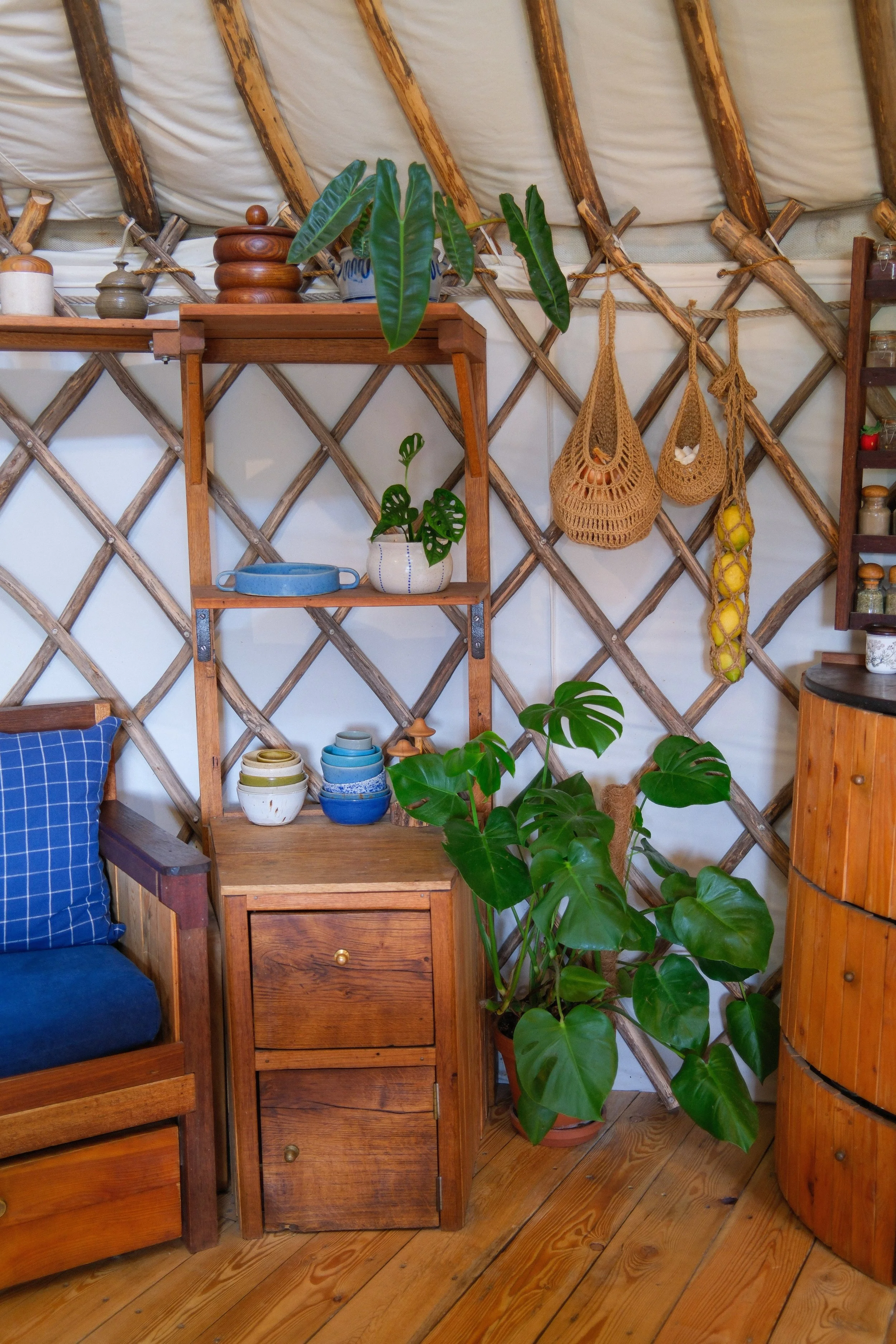
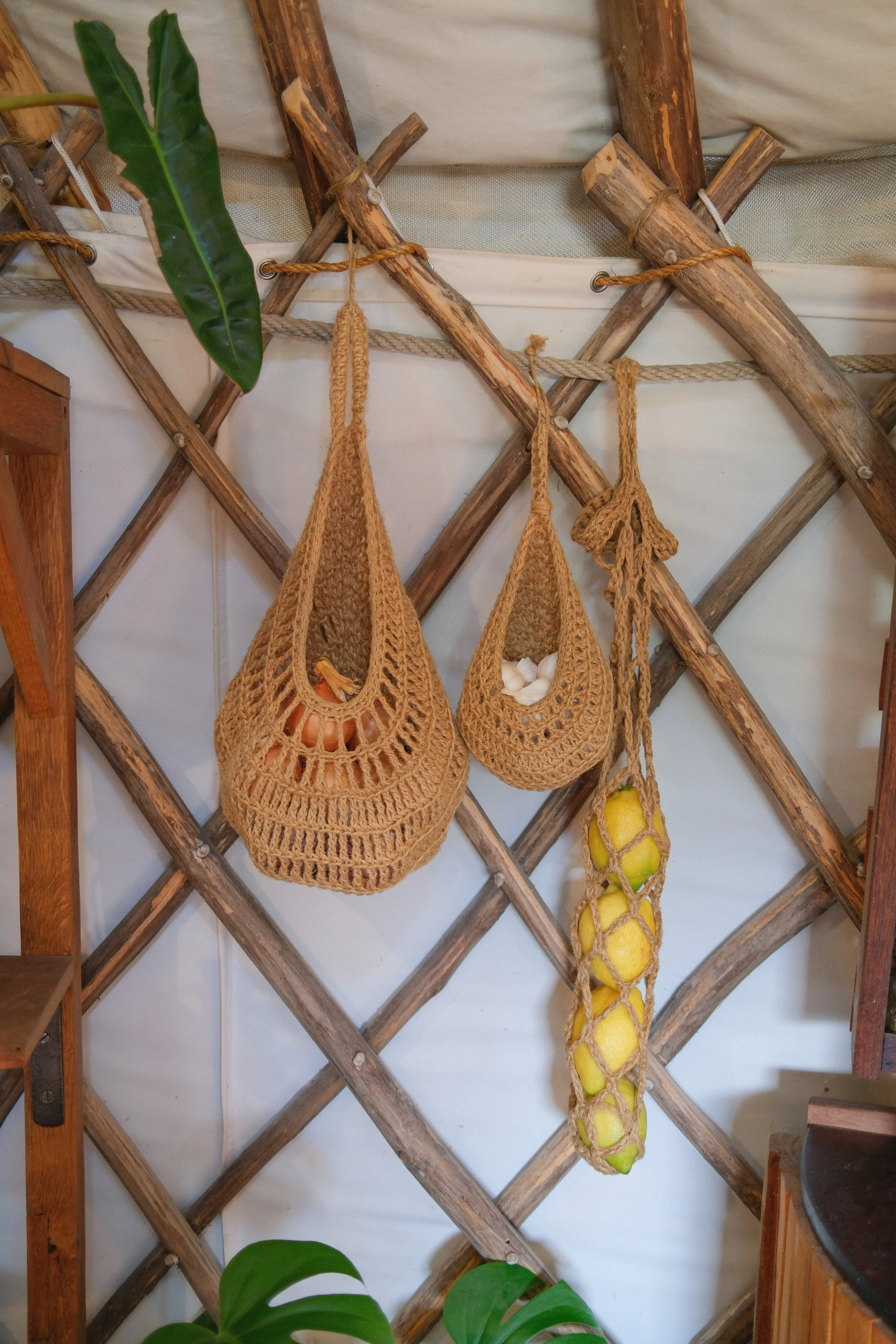
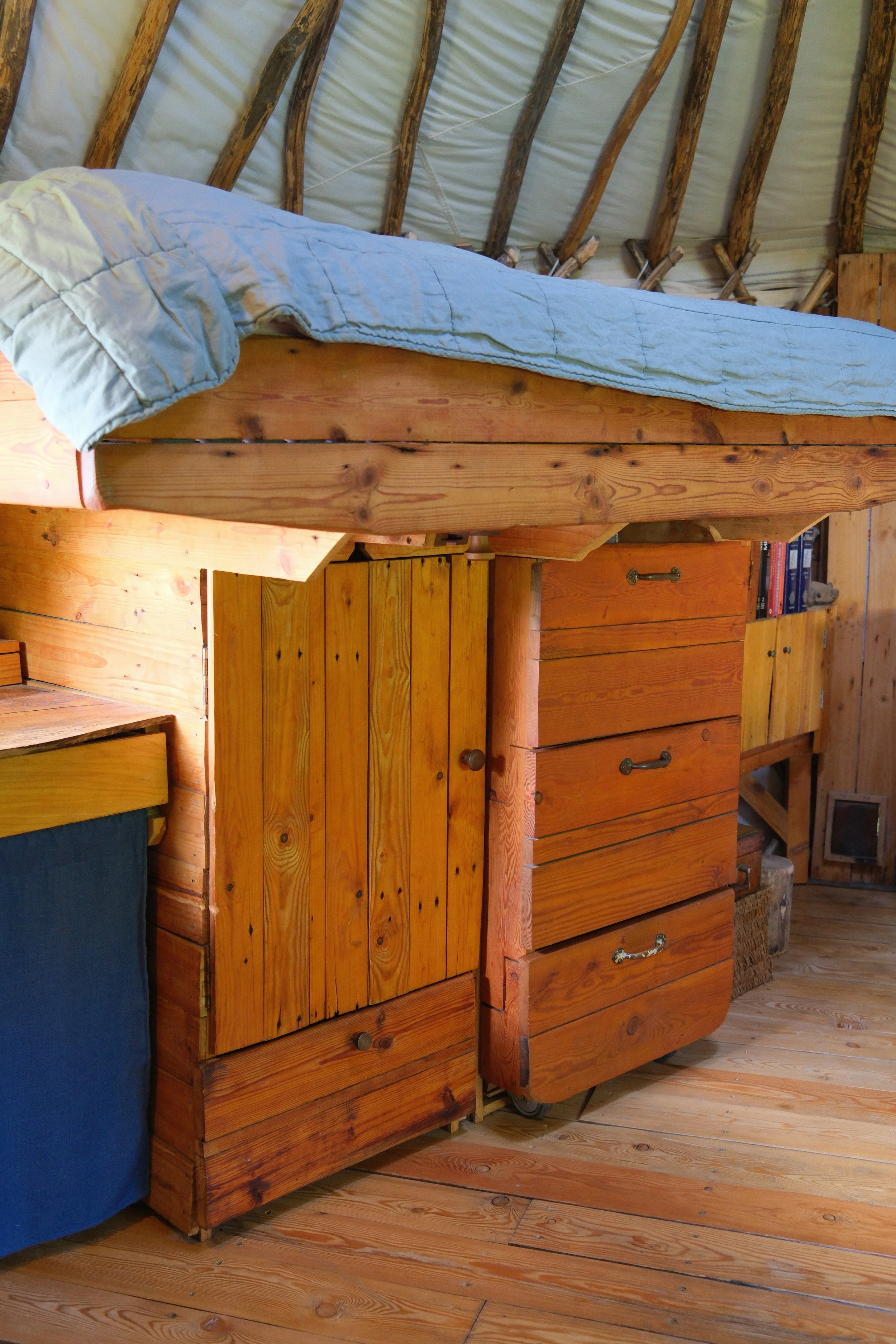
All interior wood is recycled. Pallet wood is predominant, as it is widely available. We dismantle pallets, remove nails, sand, and oil the wood; a laborious but rewarding process. Much of the tropical wood (Meranti, Afzelia, Afrormosia, Azobe) comes from the same container of a renovation company where we got our windows and door. The old door and window frames are an excellent source of high-quality hard woods. Our oak tabletop is made from the old staircase of a house in a 17th century beguinage. The desk, and much of the pear and poplar we used come from the container of a film studio, part of the decor for the Flemish series ‘Thieves of the Wood'. Most of our beech, oak and mahogany were found on the streets, from discarded furniture.
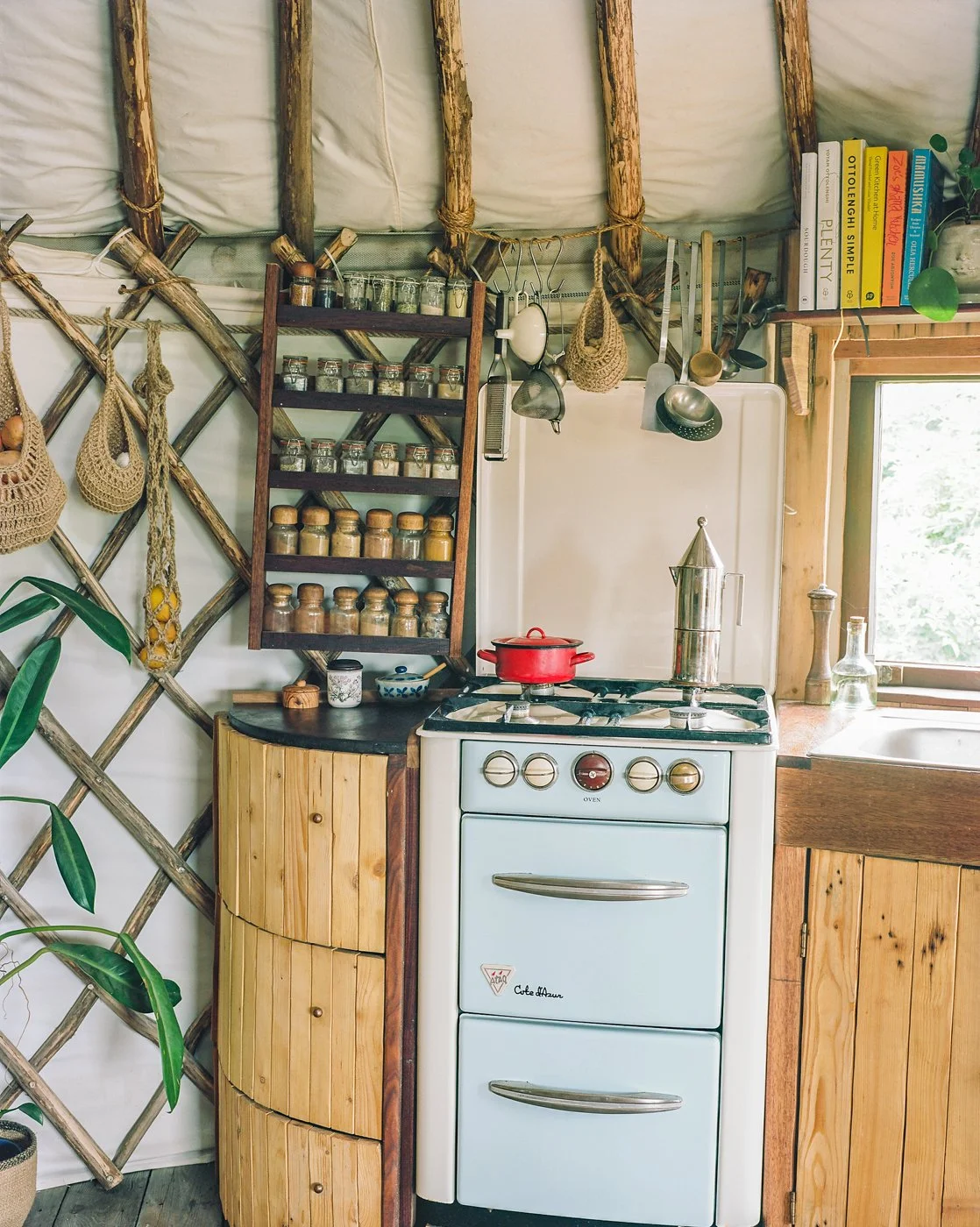
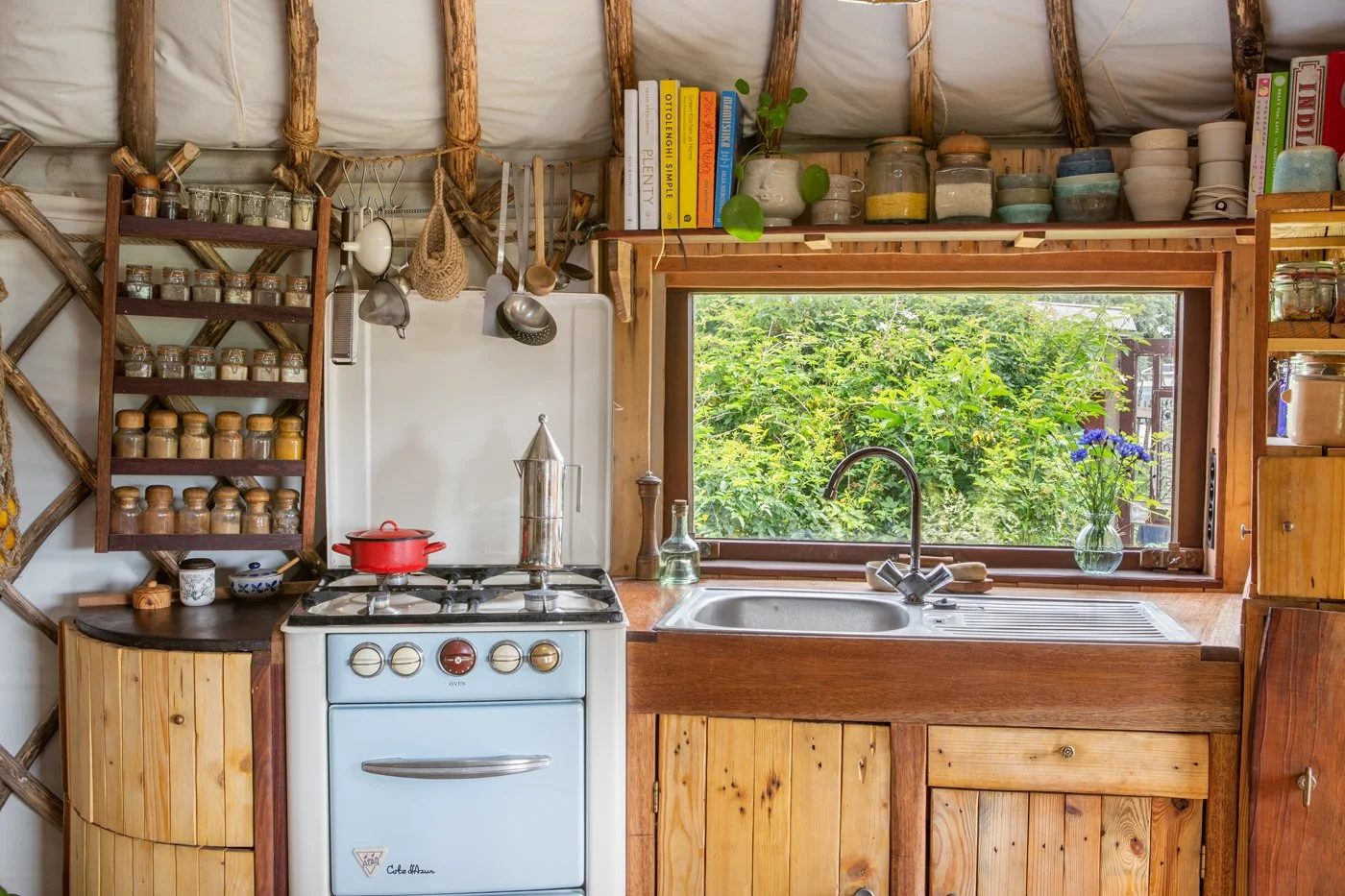
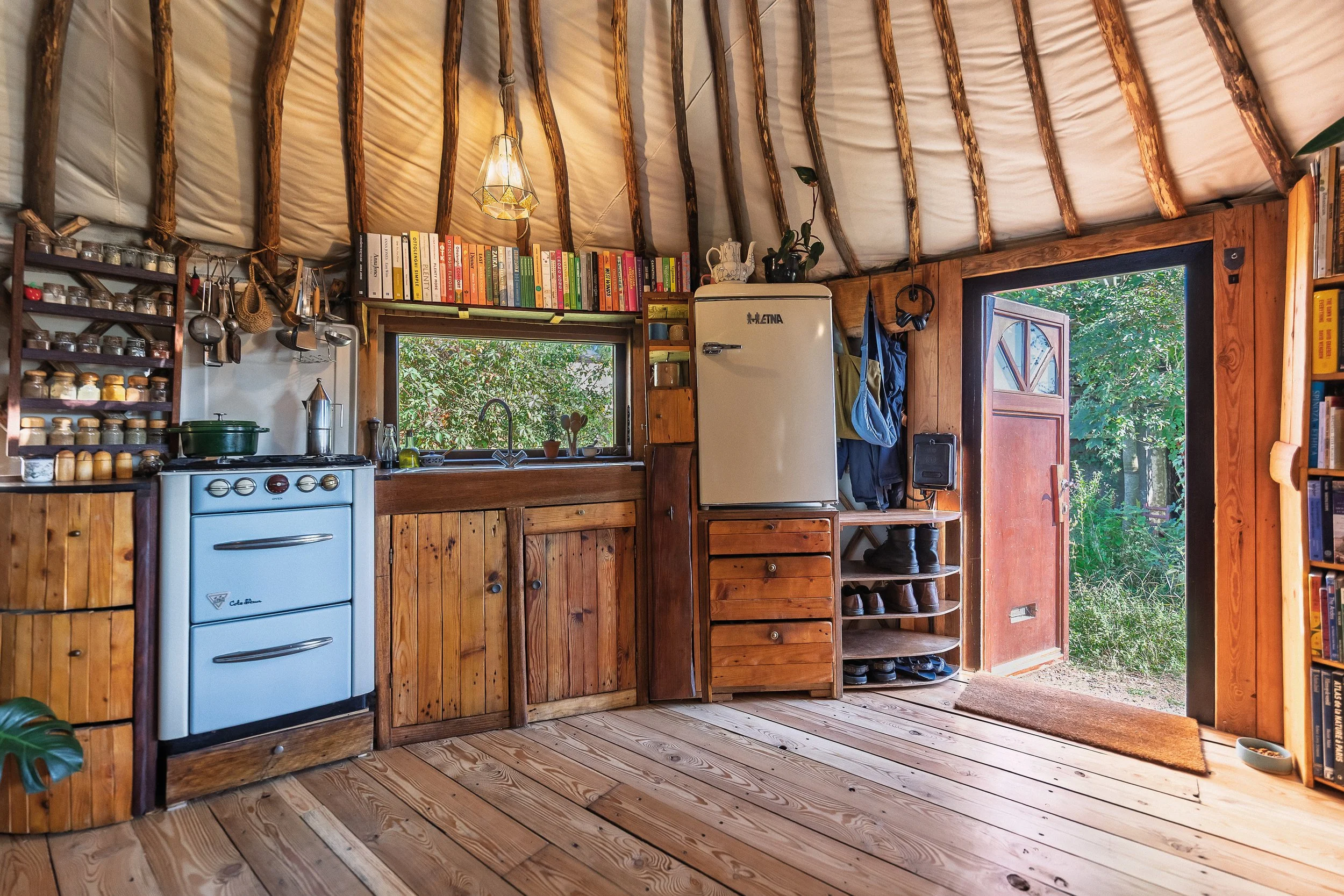
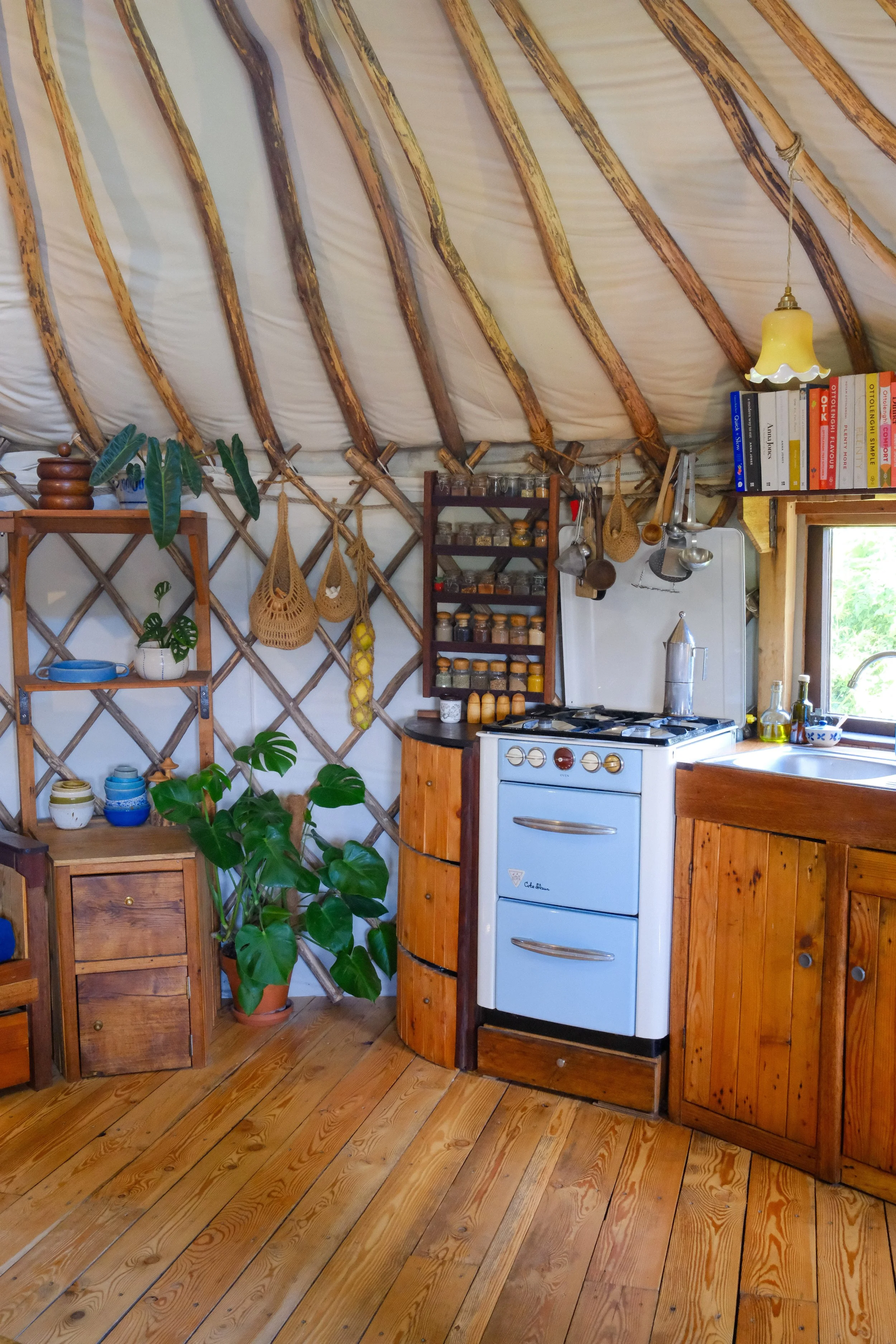
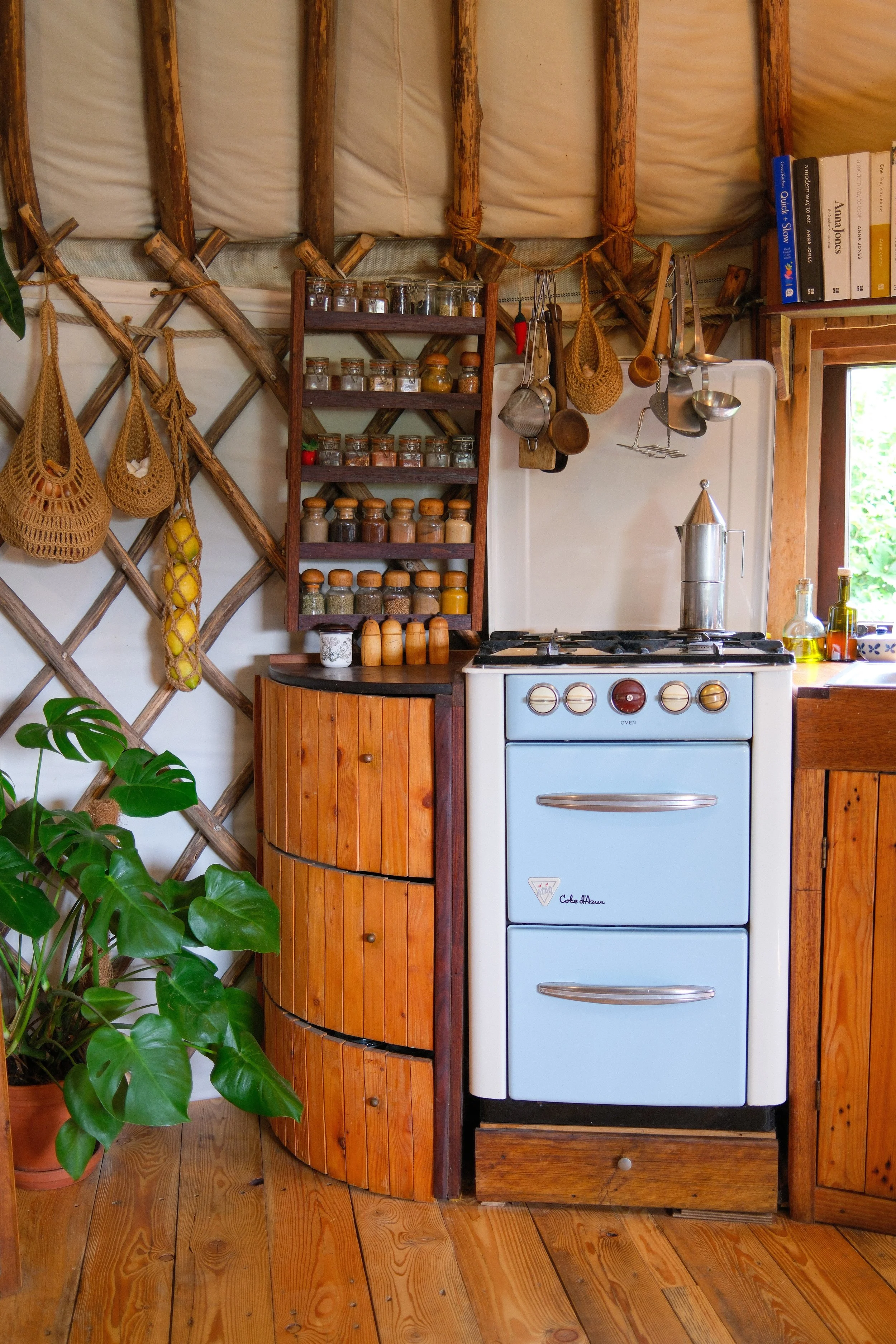
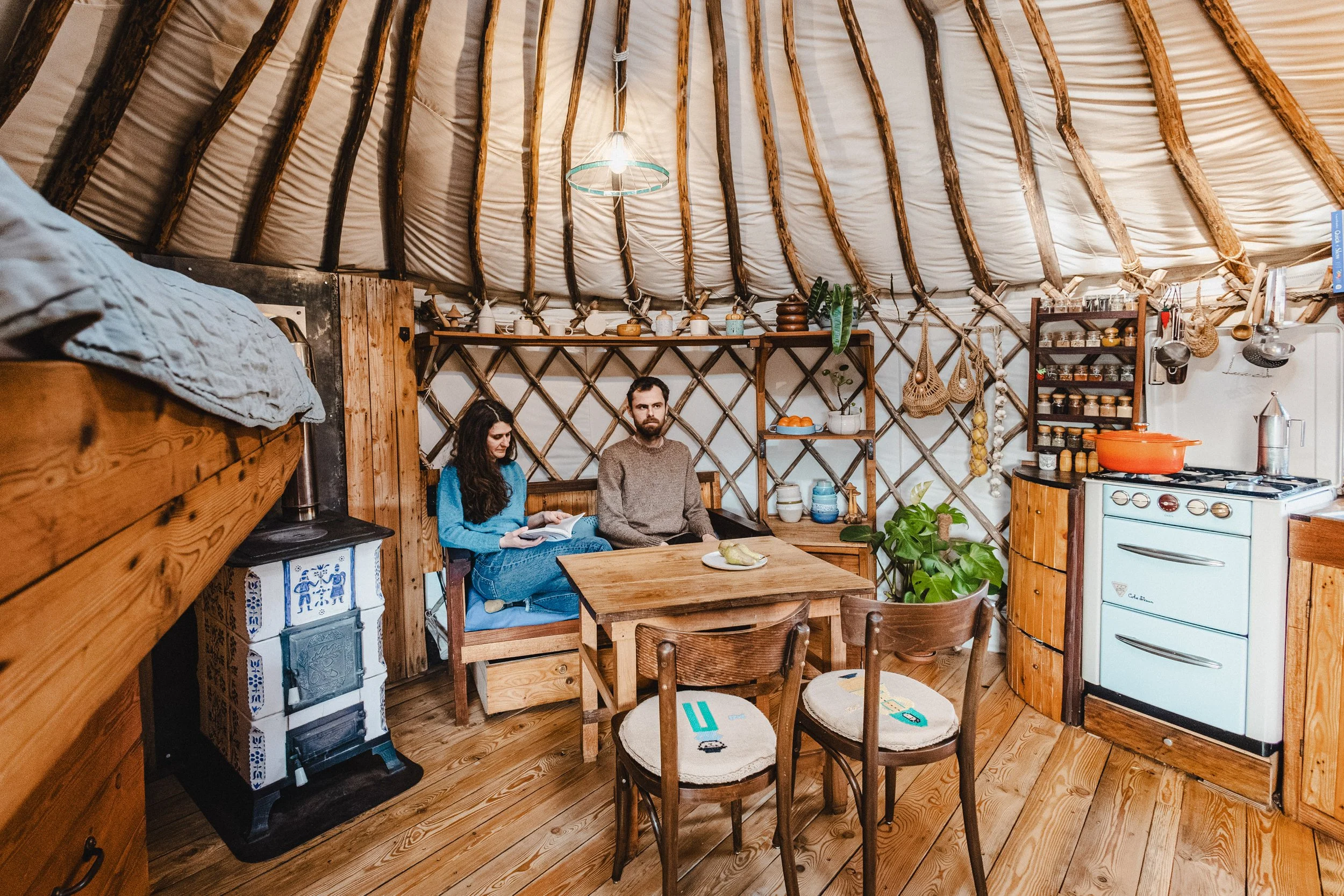
The kitchen is custom-built with cabinets, drawers, shelves, a sink, and a 4-burner cooker from the 1950s (found on Marktplaats and converted from natural gas to propane). Small details like handles, knobs, hooks, and switches were gathered from scrapyards, flea markets, and containers.
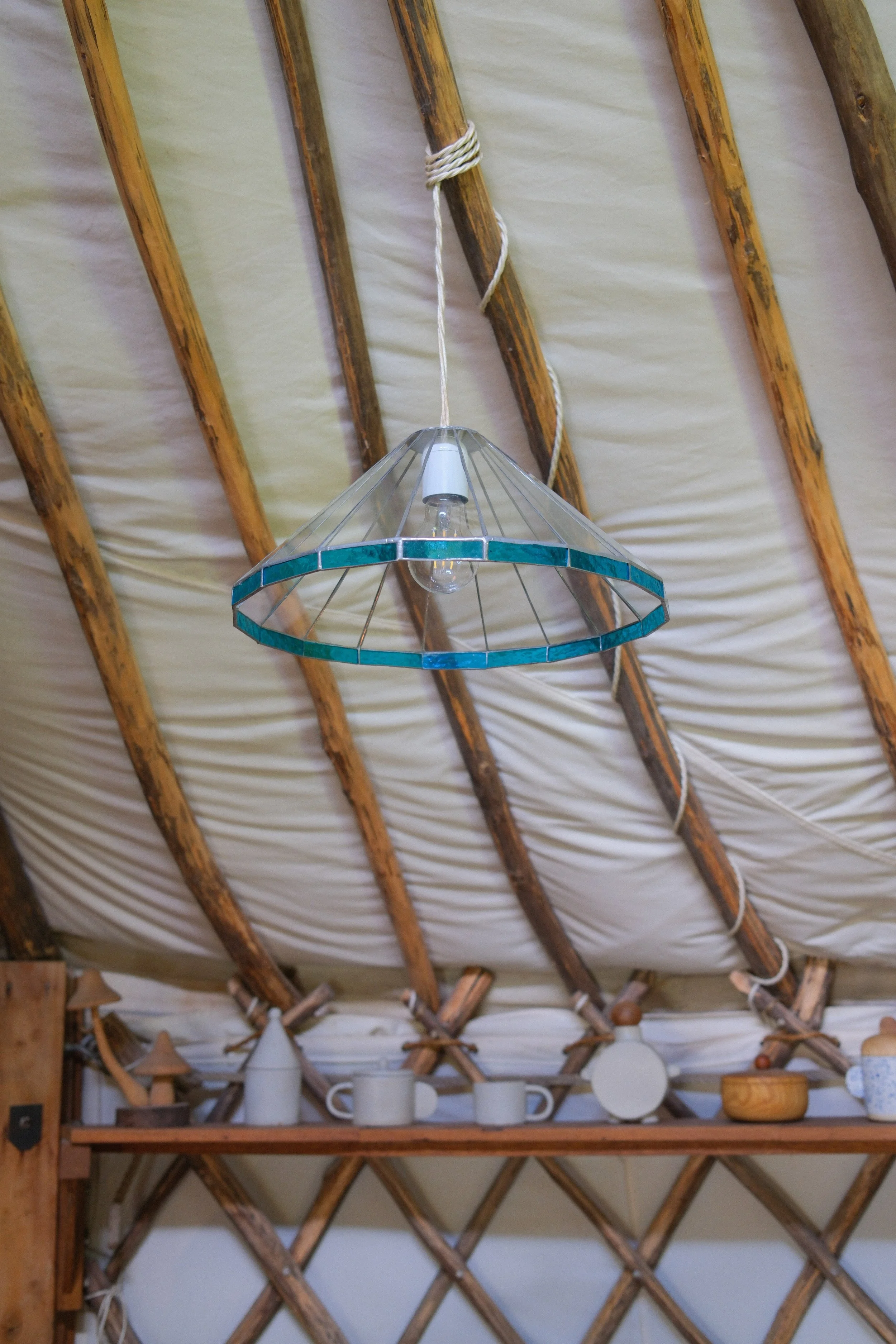
Hanging lamps were made from waste glass. Glass is another a material which can be commonly found for free. Even broken pieces of glass can still be reused, cut to size and made in to something nice and useful.
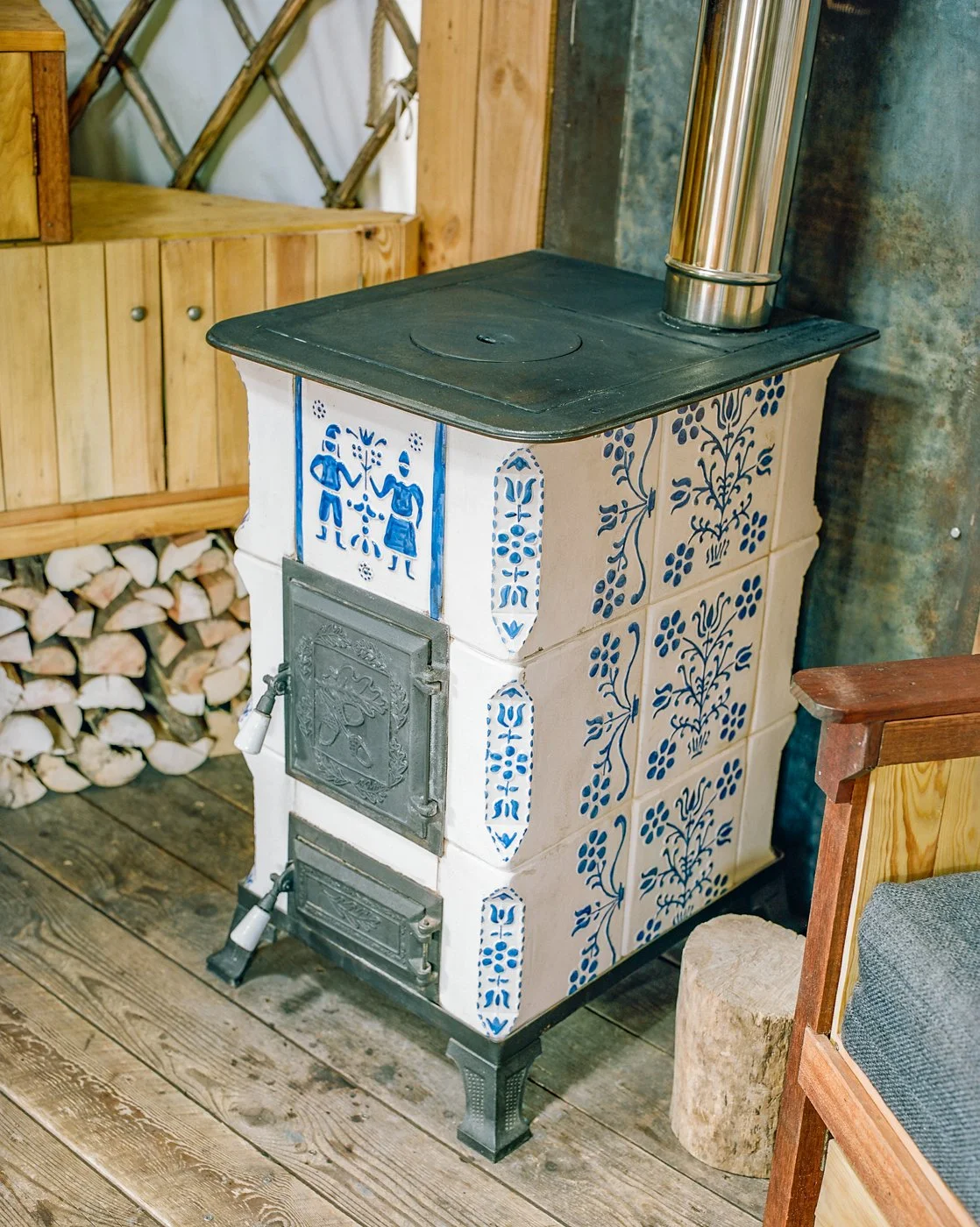
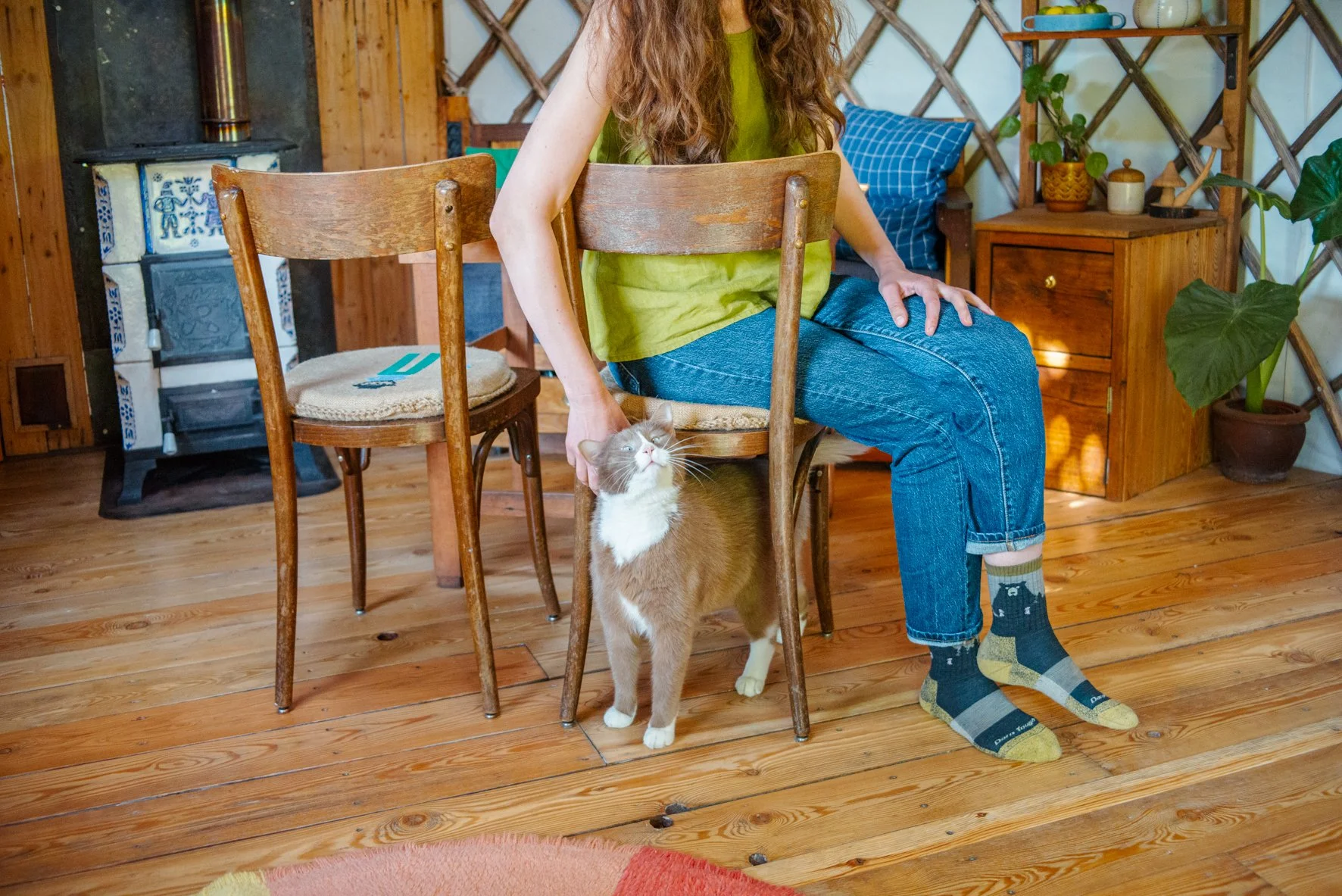
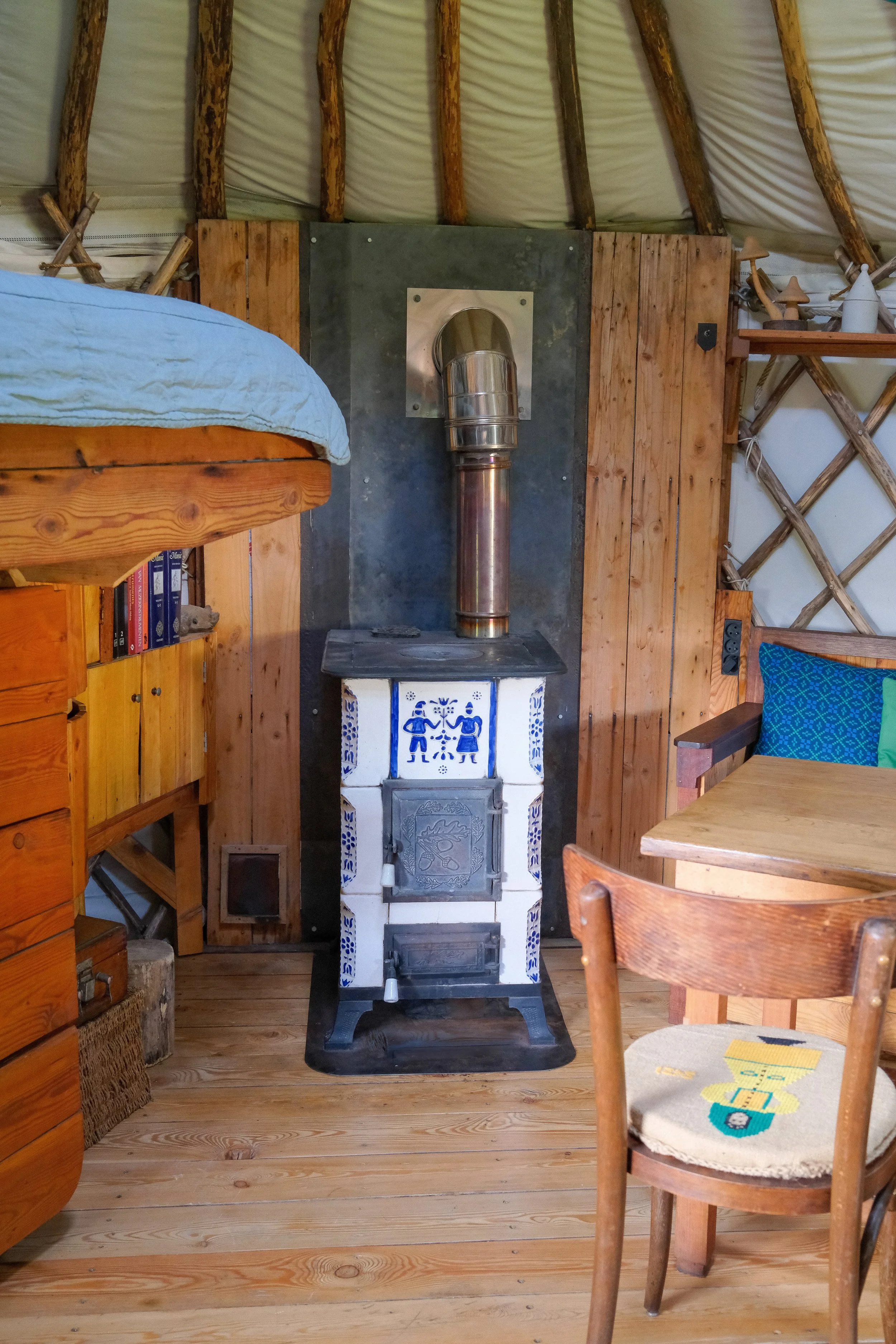
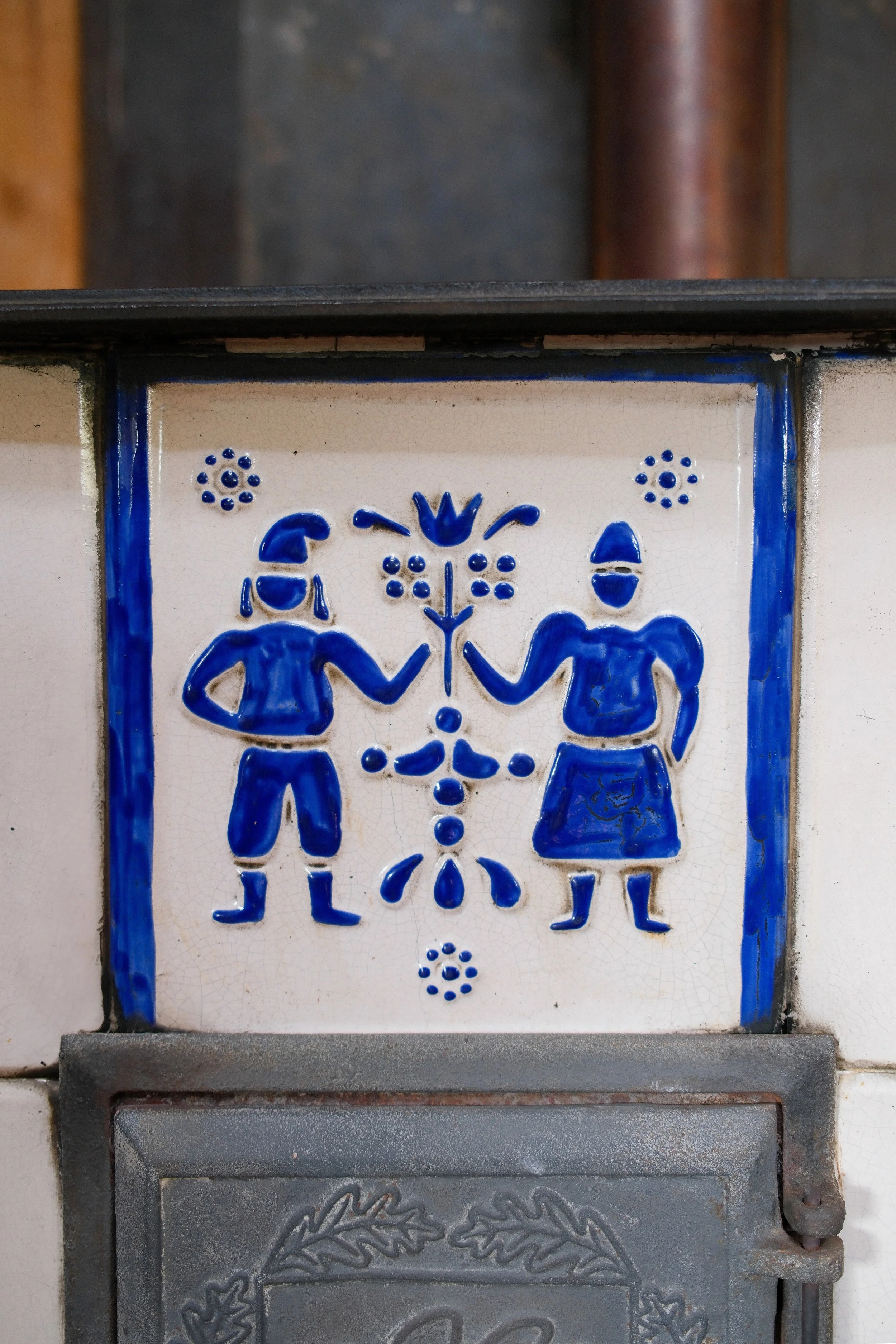
Heating is provided by a portable terracotta tile stove from Teracota Mediaș. Beautifully decorated with floral motifs, it is both a practical source of warmth and a piece of folk art. The tradition of making terracotta tiles goes back to the potter’ guilds in the 14th and 15th century Transylvania. Each tile is pressed into molds, painted by hand with cobalt pigment, and glazed. Inside, a hidden labyrinth of brick and clay guides the hot gases slowly toward the chimney, allowing the ceramic mass to absorb and store warmth. After a single firing, the tiles gently radiate heat for 8–24 hours, keeping wood consumption low and the atmosphere cozy. In Saxon tradition colour blue symbolises the open sky and water, bringing a sense of calm and order that balances the heat radiating from the fire. Its 200 kg weight made the journey to Belgium and the placement inside the yurt no small task.
Mini-yurt (the sanitary unit)
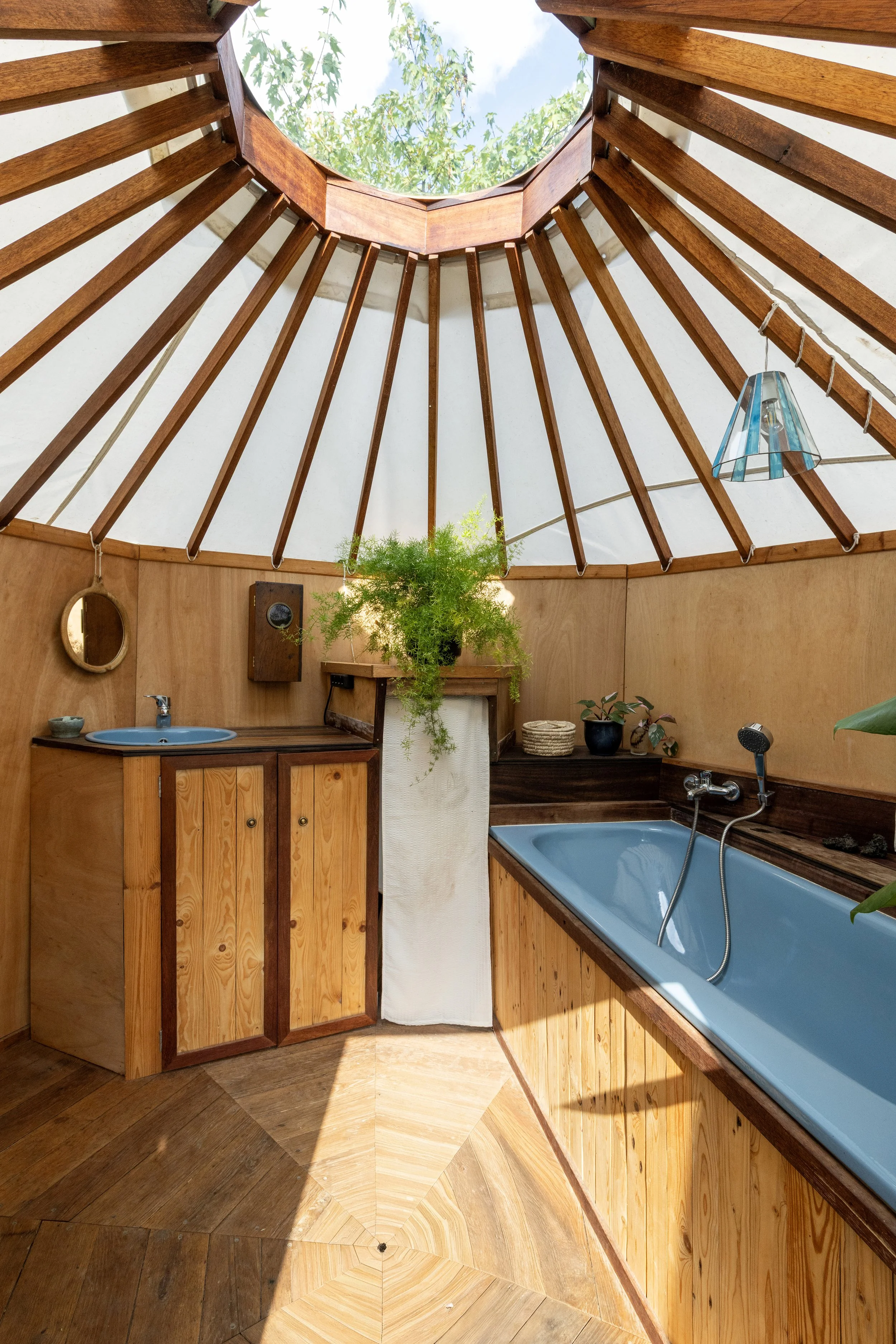
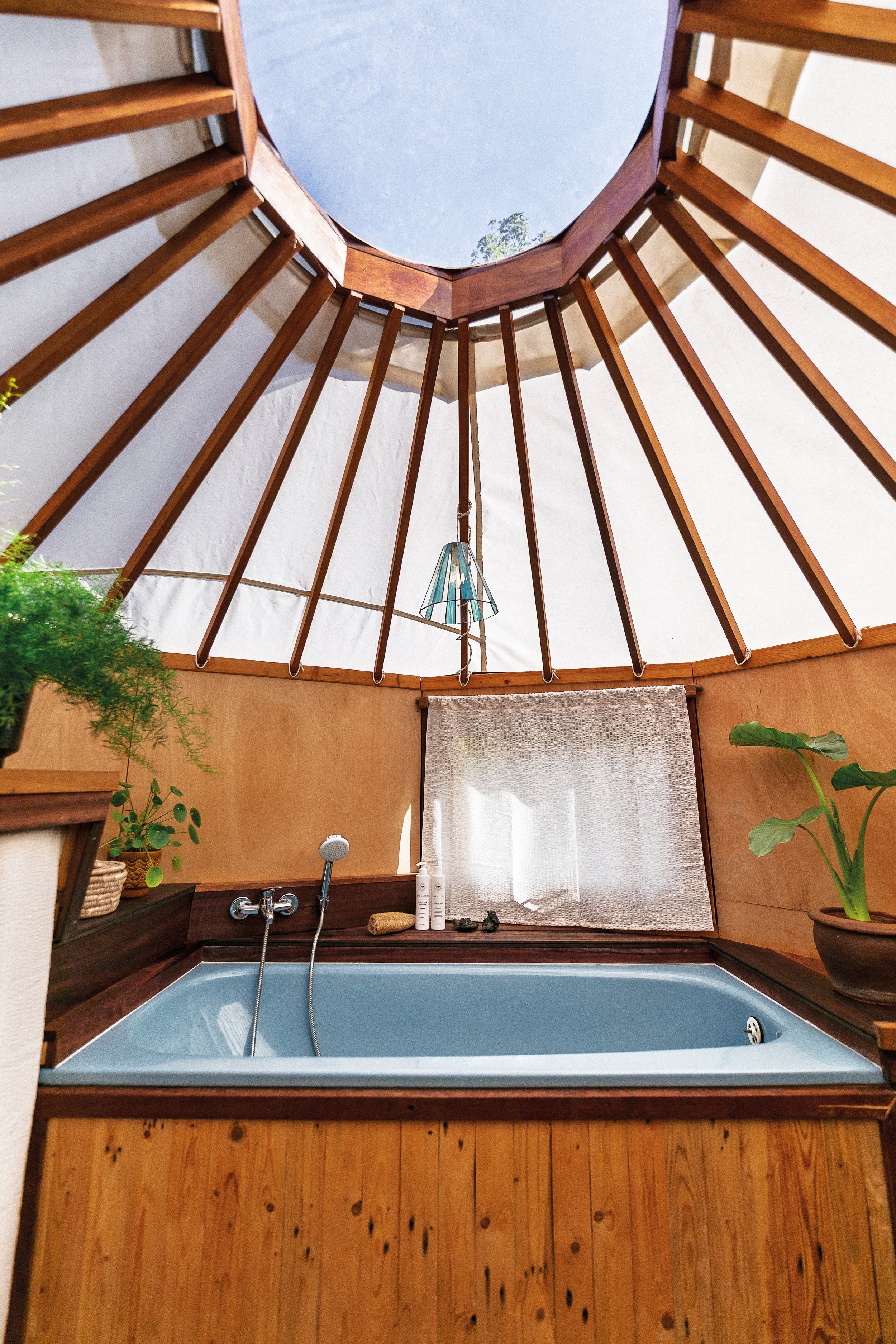
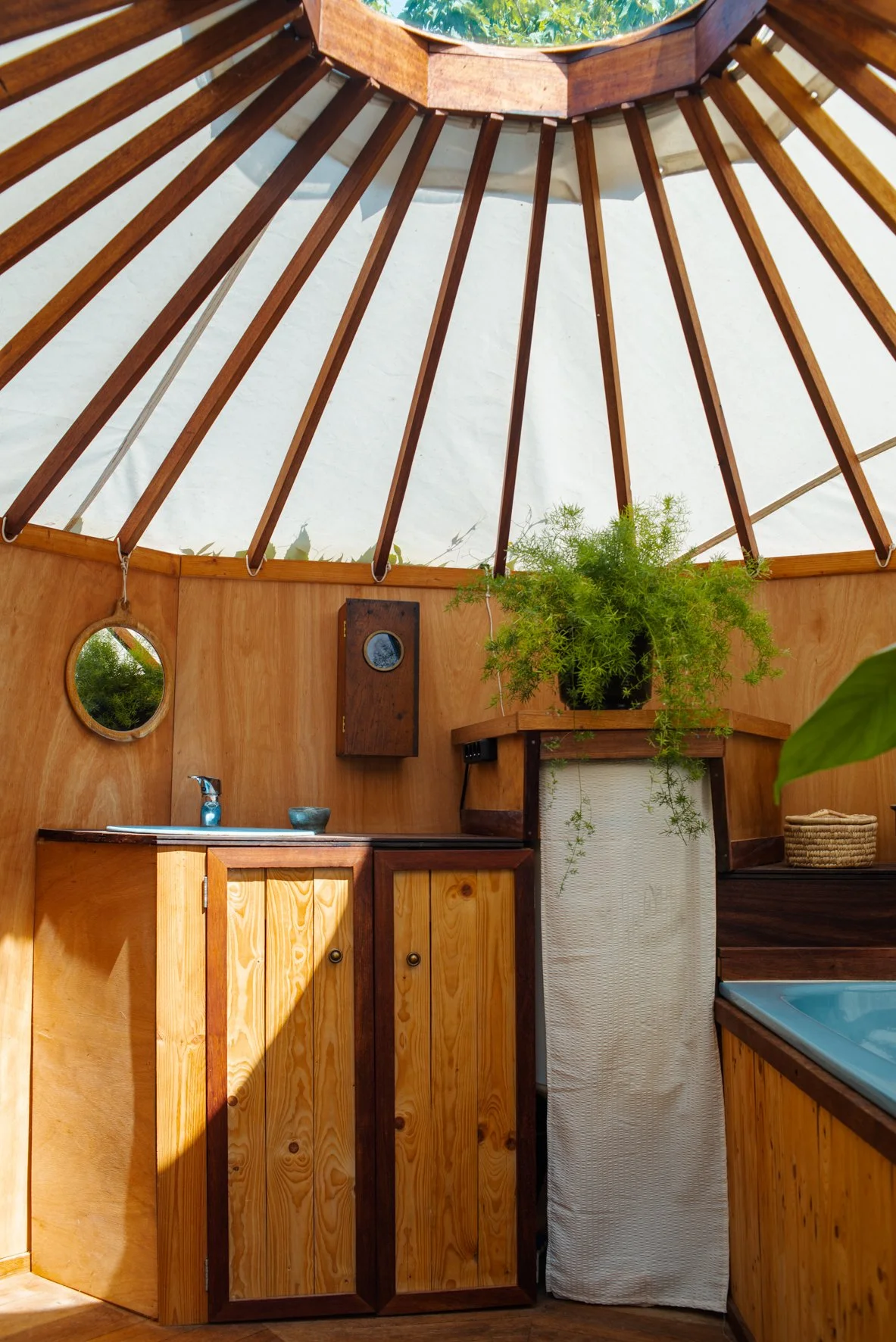
The bathroom yurt measures 3m in diameter, ≈20 m².
The blue bathtub and sink were listed for free on Facebook Marketplace; we only had to drive to Antwerp to pick them up.
Material Philosophy
Professionals rarely work with waste materials such as pallets or repurposed door frames; not because of their quality, but because of the time required to process them. Removing screws, nails, hinges, paint, PUR and caulking is slow and laborious. Once cleaned, assembling the wood into a design that is both functional and beautiful typically requires more creative manoeuvres than if one were to simply order the materials new in the required dimensions.
The yurt was built with approximately 80 % recycled materials (garbage), 10 % second-hand objects (e.g., cooker, fridge) and 10 % new or locally crafted materials (e.g., sheep felt, wood stove).
Recycled materials are never uniform or standard. But idiosyncratic or quirky traits can become an integral part of the composition, rather than a nuisance that obstructs series production. As a consequence, the final product, whether a dining table or a garden bench, cannot be reproduced; each object turns out distinct.
Another benefit of working with waste materials is that the making process stays challenging and creative, both for the hands and the head. The restraints and non-uniformity of the materials force us to come up with creative solutions to technical problems. It is a rather fluent way of thinking and working, since the ideas mostly grow out of the specific collected materials.
Building a shelter from urban waste can be understood as a form of vernacular architecture: garbage is one of the few truly local and abundant resources in the city. Its low-tech design and self-built construction, carried out without specialist input, reinforce this vernacular logic.
Living as Practice
Living in the yurt sharpens our awareness of limits: of space, resources, energy and time. These limits do not feel restrictive, but help structure daily life. Tasks such as heating, repairing, cooking and maintaining become part of a steady routine, grounded in care rather than convenience.
By embracing reuse, low-tech design, and self-built construction, we try to show that comfort, beauty, and well-being do not require (over-) consumption, and that a meaningful life is possible with less.
If appreciation for crafts, good food, self-sufficiency, simplicity and friendliness are values we seek to embrace, then the yurt offers a fitting context in which to live, work and reflect.